RESEARCH-DRIVEN ARGUMENT ON DIGITAL SYSTEMS AND CHILD DEVELOPMENT
Digitized Childhood
COMPANY
Institute of Design
Role
Design Researcher · Strategic Designer
EXPERTISE
Evidence-based research · Systems & futures thinking · Ethical technology framing
YEAR
2025
Project Overview
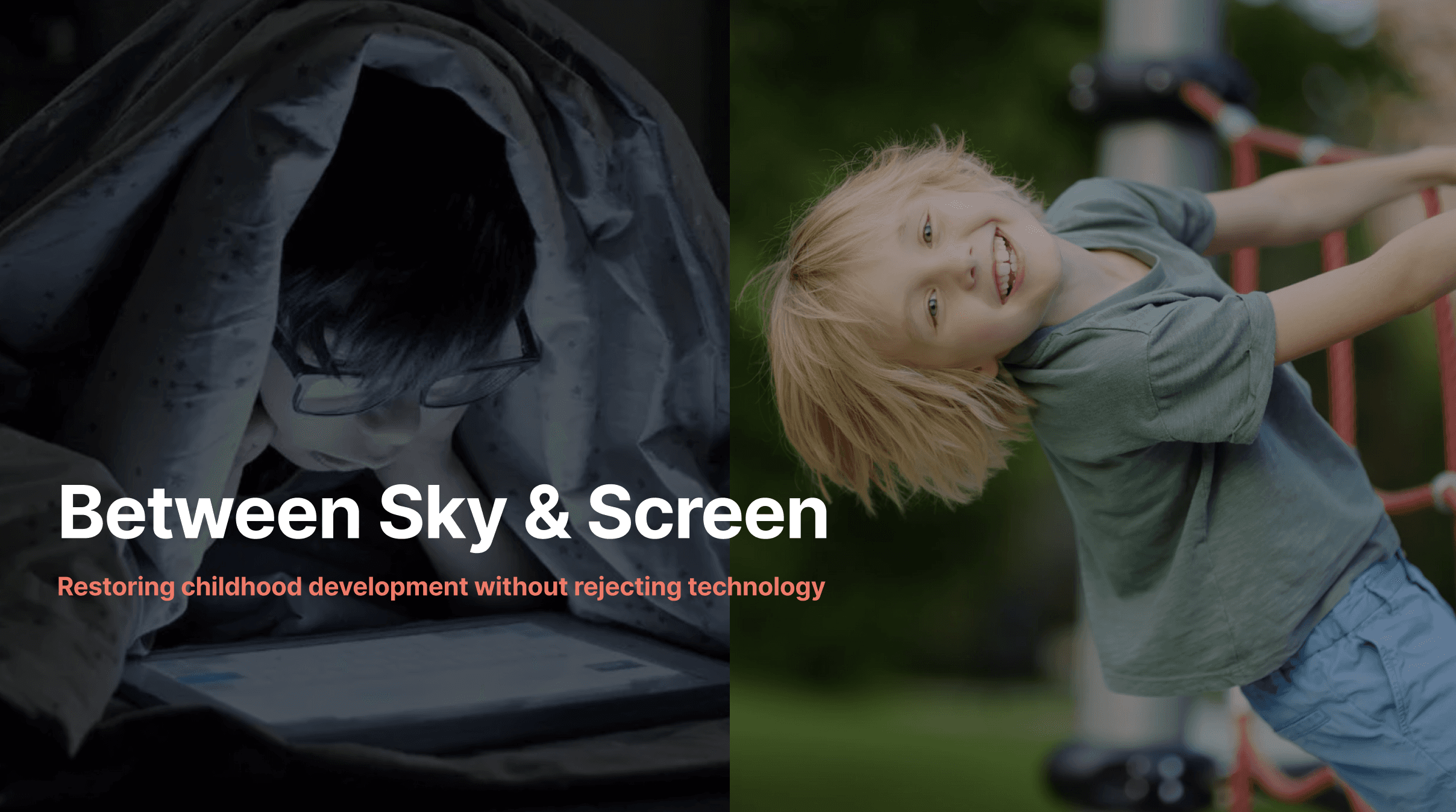
Digitized Childhood is a research-led inquiry into how digital technologies are reshaping childhood—not by how long children use screens, but by what experiences screens displace.
Rather than proposing a single product solution, this project builds an evidence-based argument that reframes digital childhood as a developmental infrastructure problem with long-term consequences.
The Central Tension
The dominant narrative around children and technology focuses on moderation: limiting screen time, choosing better content, or delaying device access.
This project argues that these approaches miss the core issue. The problem is not screen duration—it is displacement. When digital systems replace peer play, boredom, physical exploration, and emotional regulation, the underlying developmental inputs are lost.
What’s Being Displaced
Developmental science shows that core capacities—such as executive function, emotional regulation, identity formation, and social confidence—are built through repeated, embodied, and unstructured experiences in the physical and social world.
As digital systems increasingly mediate children’s time and attention, several foundational experiences are being reduced or removed altogether:
Peer play
Unstructured interaction with other children, where conflict, cooperation, and social boundaries are learned through direct experience.
Physical movement
Everyday bodily activity that supports motor development, spatial awareness, and emotional regulation.
Productive boredom
Moments of cognitive downtime that encourage imagination, self-direction, and internal motivation.
Face-to-face social learning
In-person cues such as tone, gesture, and shared attention that shape empathy, communication, and social confidence.
These experiences are not optional. They are the underlying inputs through which healthy development occurs—and once displaced during critical windows, they cannot be fully recovered later.
Evidence & Signals
This argument is grounded in converging evidence from developmental psychology, neuroscience, and public health, alongside emerging global policy responses to children’s digital exposure.
Rather than relying on a single dataset or study, the research points to consistent patterns across multiple domains:
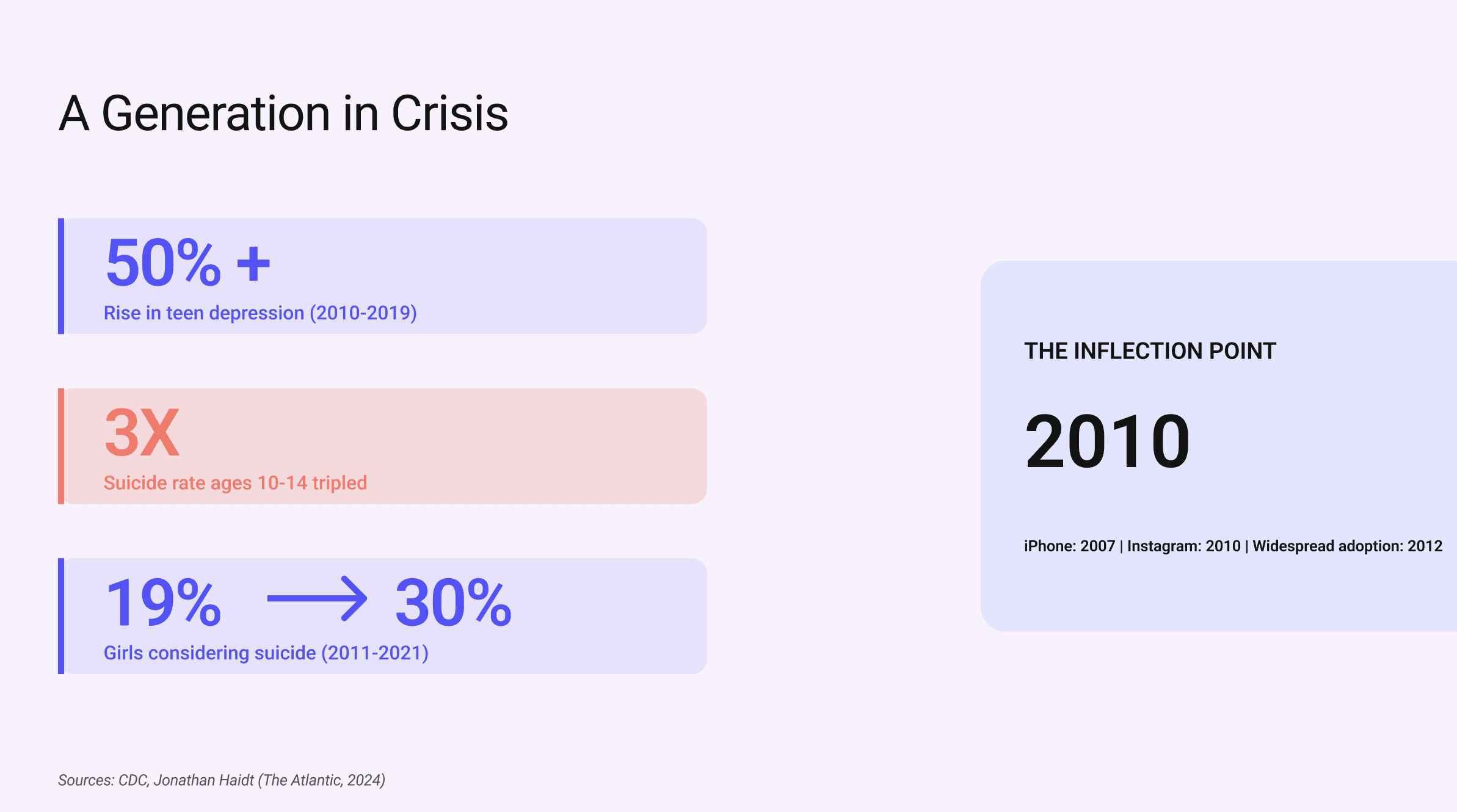
Rising mental health indicators
Increases in anxiety, attention difficulties, and emotional dysregulation among children and adolescents correlate with shifts in how time is spent—particularly the replacement of unstructured, social, and physical experiences.
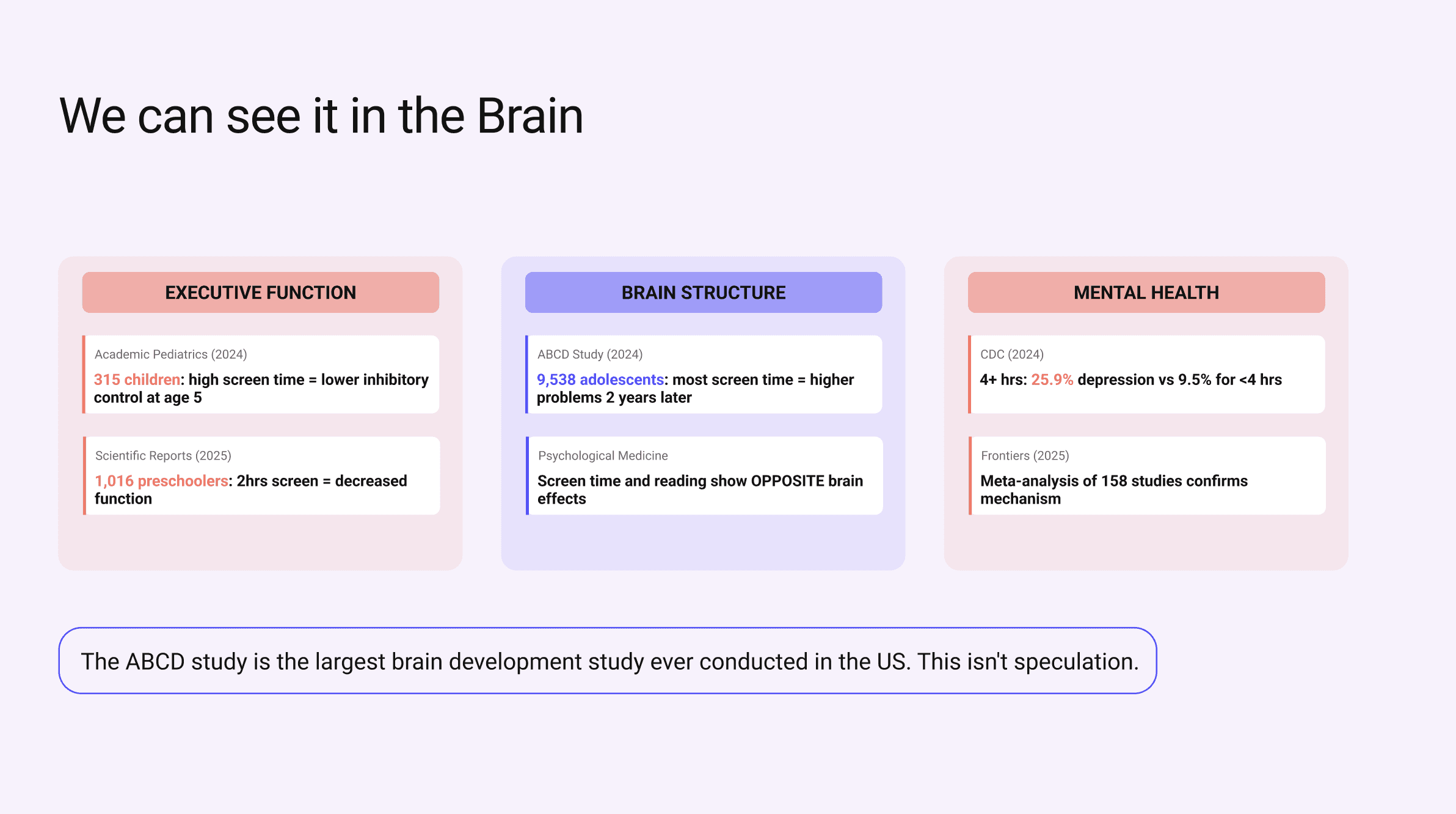
Brain development research
Studies in developmental neuroscience show that key cognitive and emotional capacities are shaped during sensitive developmental windows, through repeated real-world interaction rather than passive or screen-mediated engagement.
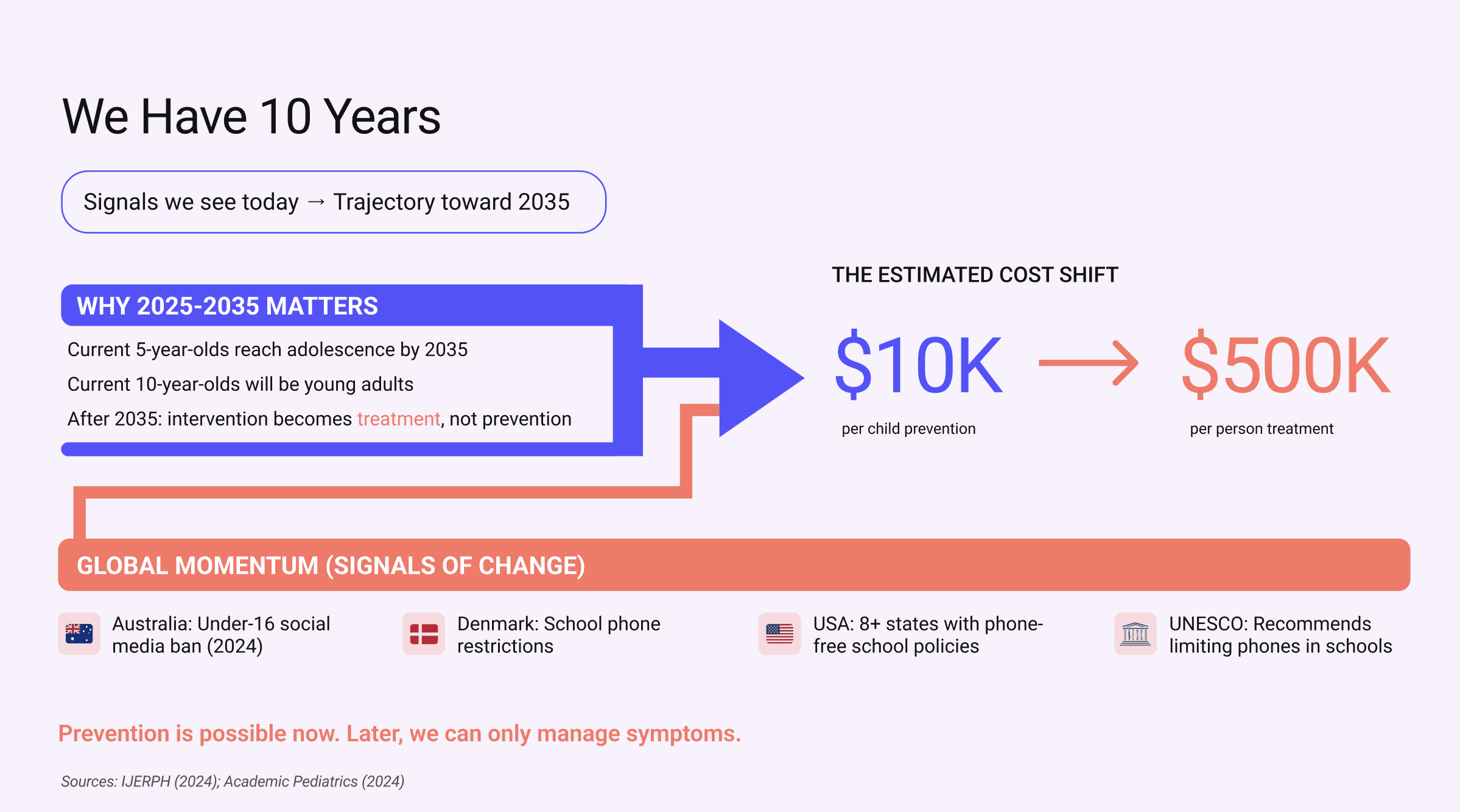
Policy shifts in education and public health
Governments and school systems are beginning to restrict device use through measures such as phone-free schools, age-based access limits, and screen-use guidelines—signaling growing concern at an institutional level.
Global alignment signals
Organizations such as UNESCO and the World Health Organization have highlighted the need to protect children’s developmental environments, emphasizing wellbeing, social connection, and healthy cognitive growth over unrestricted digital exposure.
Together, these signals suggest that the digitized childhood crisis is not speculative, but already unfolding—and increasingly recognized across scientific, educational, and policy domains.
Counterarguments (and Why They Fail)
Common counterarguments suggest that screen time is inevitable, that educational content mitigates harm, or that early digital fluency is necessary for future success.
While partially true, these claims fail to account for how foundational cognitive and emotional skills are built during critical developmental windows—skills that cannot be fully recovered later in life.
Where Technology Went Wrong
The erosion of childhood development is not accidental. It is the result of deliberate design choices: engagement-optimized feeds, data extraction models, risk-averse environments, and constant stimulation.
These choices prioritize metrics over developmental health—treating children as users to retain rather than humans to support.
A Different Future (2035)
This project proposes a reframing of how technology relates to childhood development: from personal, always-on screens to shared developmental systems that support growth without dominating attention.
In a restorative future, technology does not replace childhood experiences. Instead, it plays a quieter, supportive role—encouraging movement, social connection, emotional regulation, and imagination, while preserving spaces that remain untracked, unmeasured, and free from performance metrics.
Rather than optimizing for engagement, these systems prioritize developmental health by design. They work alongside parents, educators, and communities to protect critical experiences during sensitive developmental windows.
This future is not defined by a single product or interface, but by coordinated shifts across culture, policy, and infrastructure—such as caregiver-facing guidebooks, shared play environments, and policy-aligned educational systems that place children’s wellbeing at the center.