Strategic communication project for caregivers of children with medical complexity
How to get a Pediatric Wheelchair
COMPANY
Ann & Robert H. Lurie Children's Hospital
Role
UX Researcher · Communication Designer
EXPERTISE
Healthcare & caregiver research, Information architecture, Patient navigation design
YEAR
2025
Project Description
Acquiring a pediatric wheelchair is a long, opaque process that requires caregivers to coordinate medical, insurance, and vendor systems—often while managing exhaustion, uncertainty, and emotional stress.
This project focused on designing a navigation guide to support caregivers of first-time wheelchair recipients, helping them understand the process, advocate for their child, and feel less alone throughout the journey.
Why This Problem Is Hard
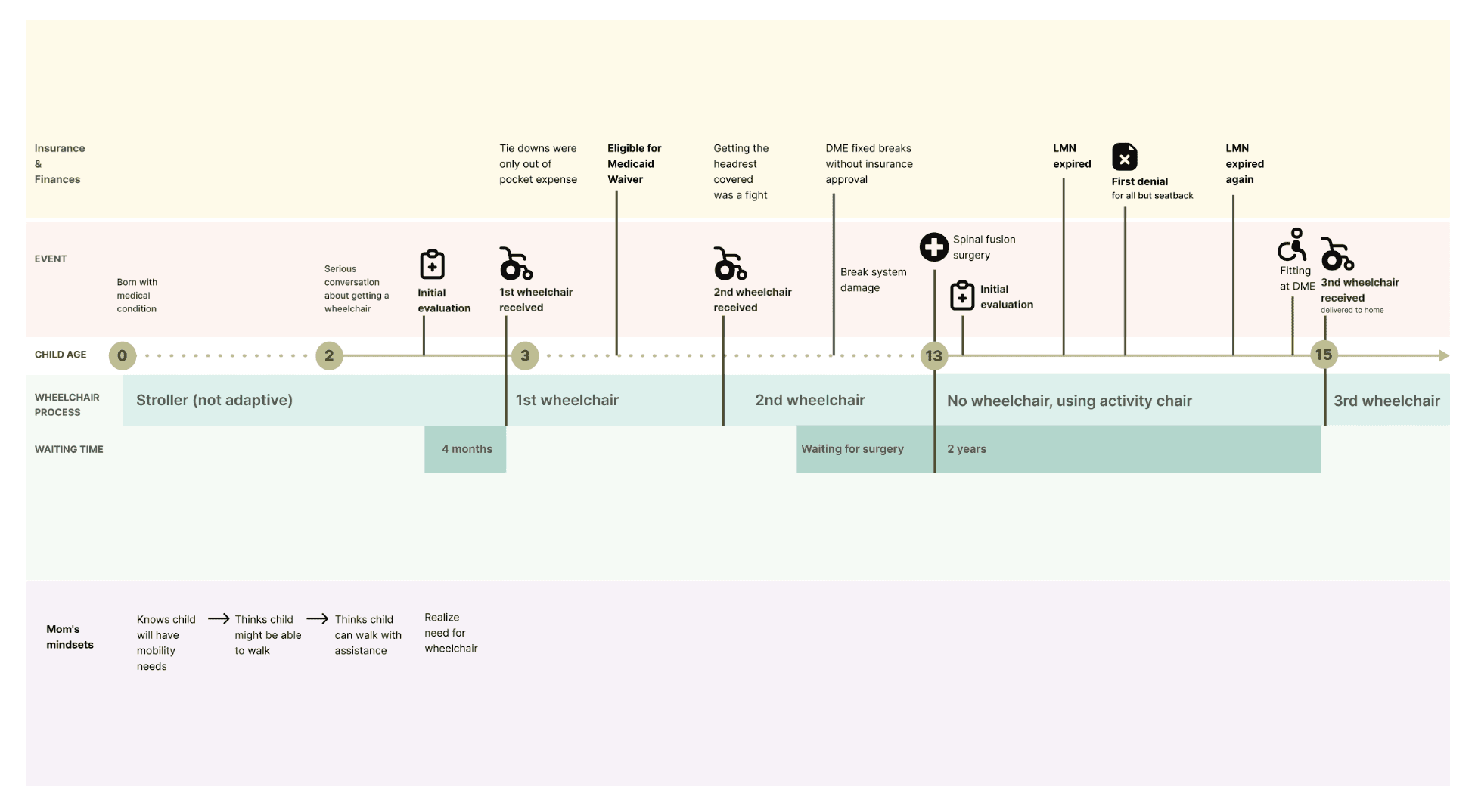
Caregivers are expected to make critical decisions about mobility devices without clear visibility into what comes next, who is involved, or what questions they are allowed to ask.
Existing resources tend to be fragmented, overly clinical, or checklist-driven—failing to capture the lived reality of caregivers navigating long timelines, waiting periods, and emotional uncertainty.
Research & Understanding Caregivers
Secondary Research
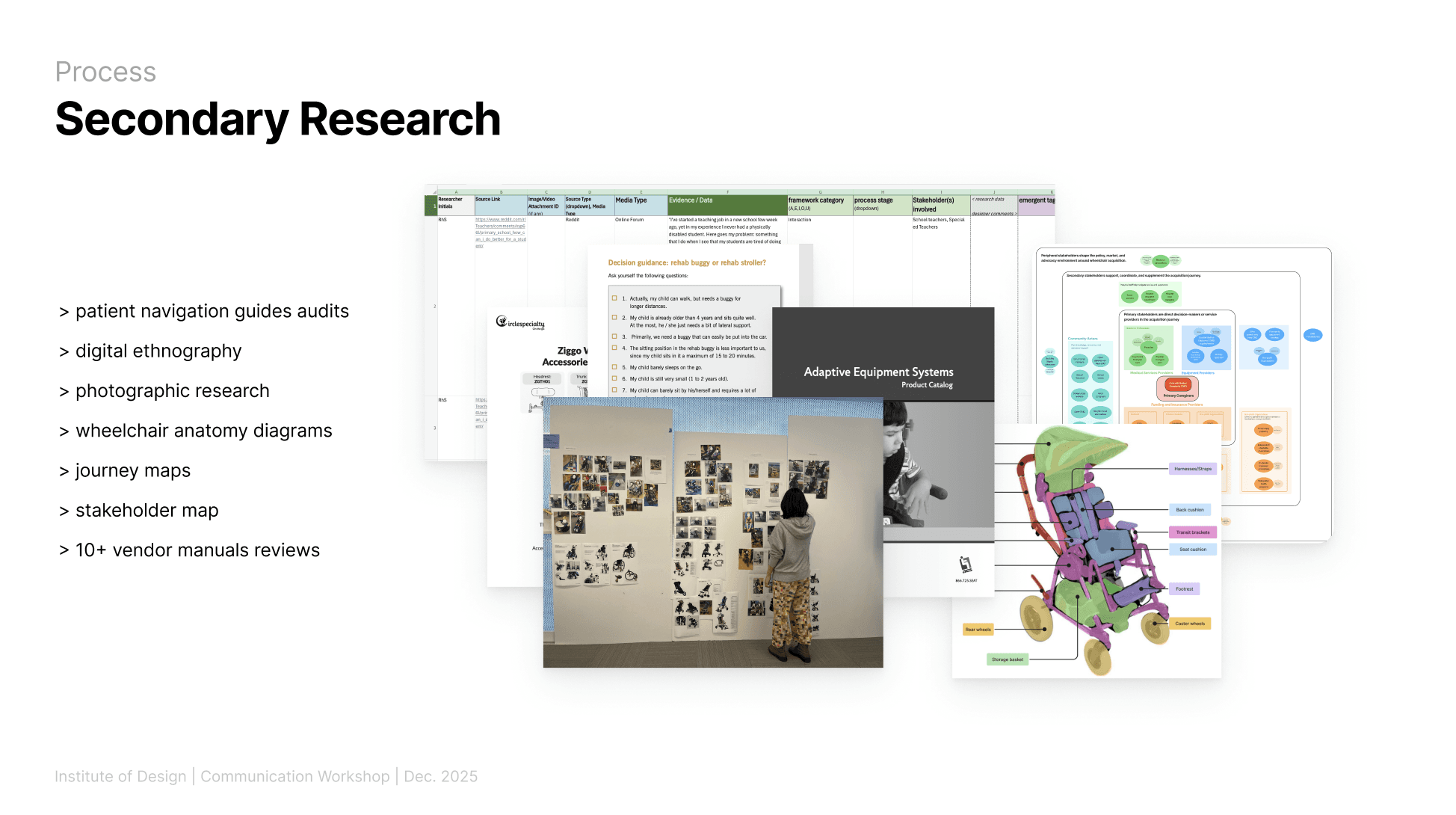
We reviewed patient navigation guides, wheelchair anatomy documentation, vendor manuals, and existing informational resources to understand how the process is typically explained—and where it breaks down.
Primary Research
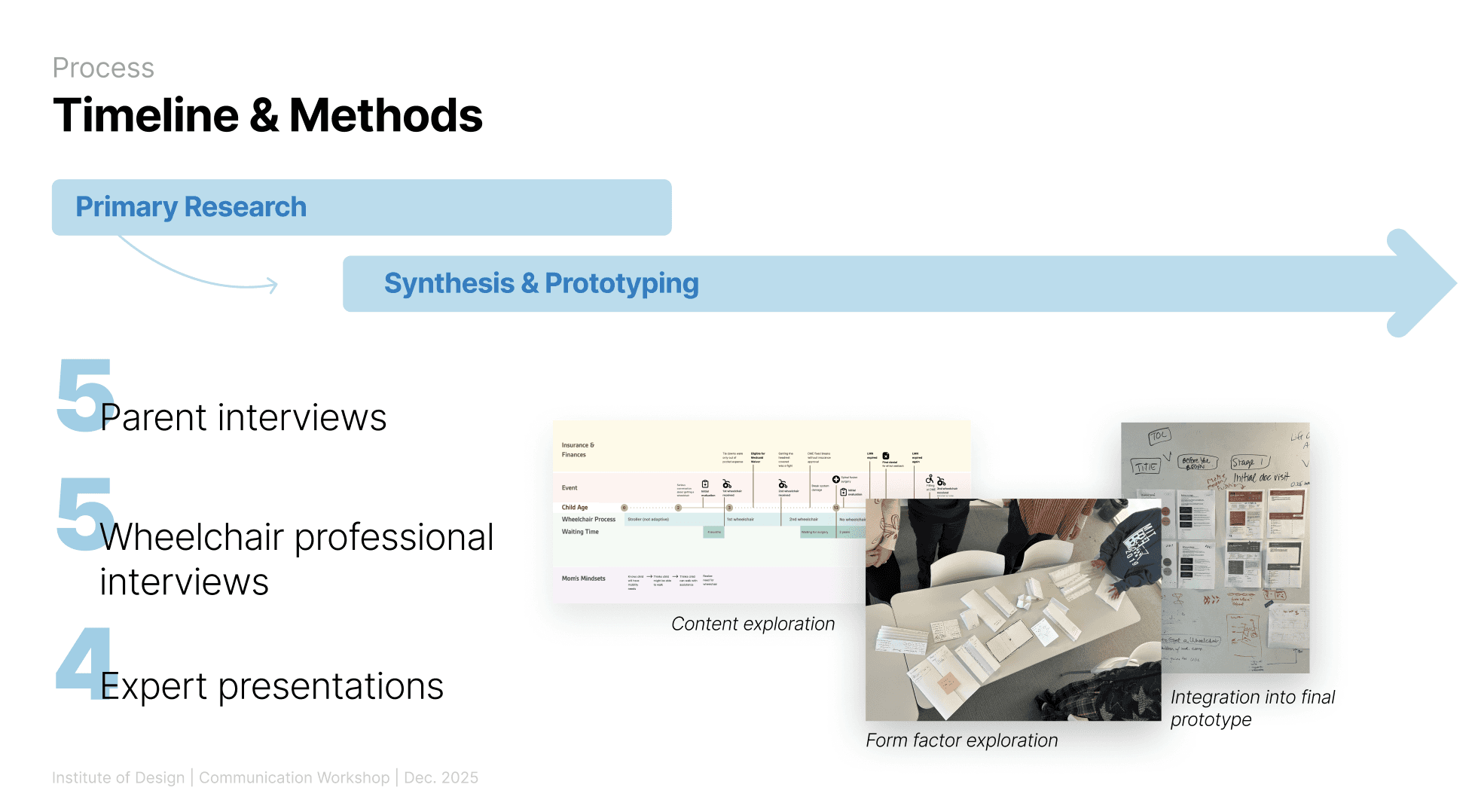
Interviews with caregivers and wheelchair professionals revealed that beyond logistical confusion, caregivers often struggle to recognize their own expertise and agency within clinical settings.
Key Insight
A recurring insight was that the wheelchair acquisition process is as much about supporting caregivers as it is about selecting a device.
Design Principles
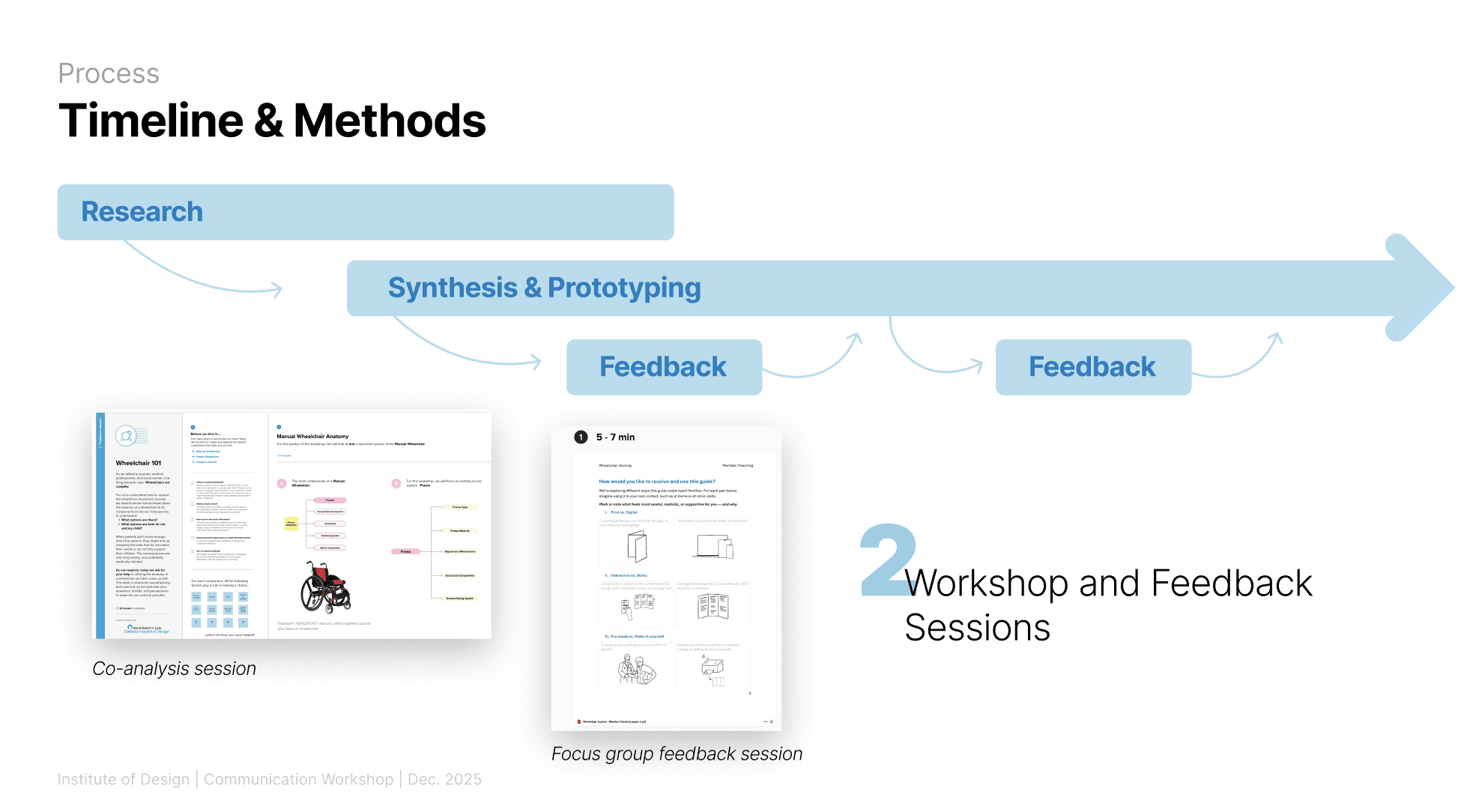
Based on our research, we defined a set of guiding principles for the navigation guide:
Clarify complexity without oversimplifying
Support caregivers “in the meantime,” not just at appointments
Encourage storytelling so caregivers can represent their child more fully
Make caregiver expertise visible and legitimate
The Solution: A Navigation Guide
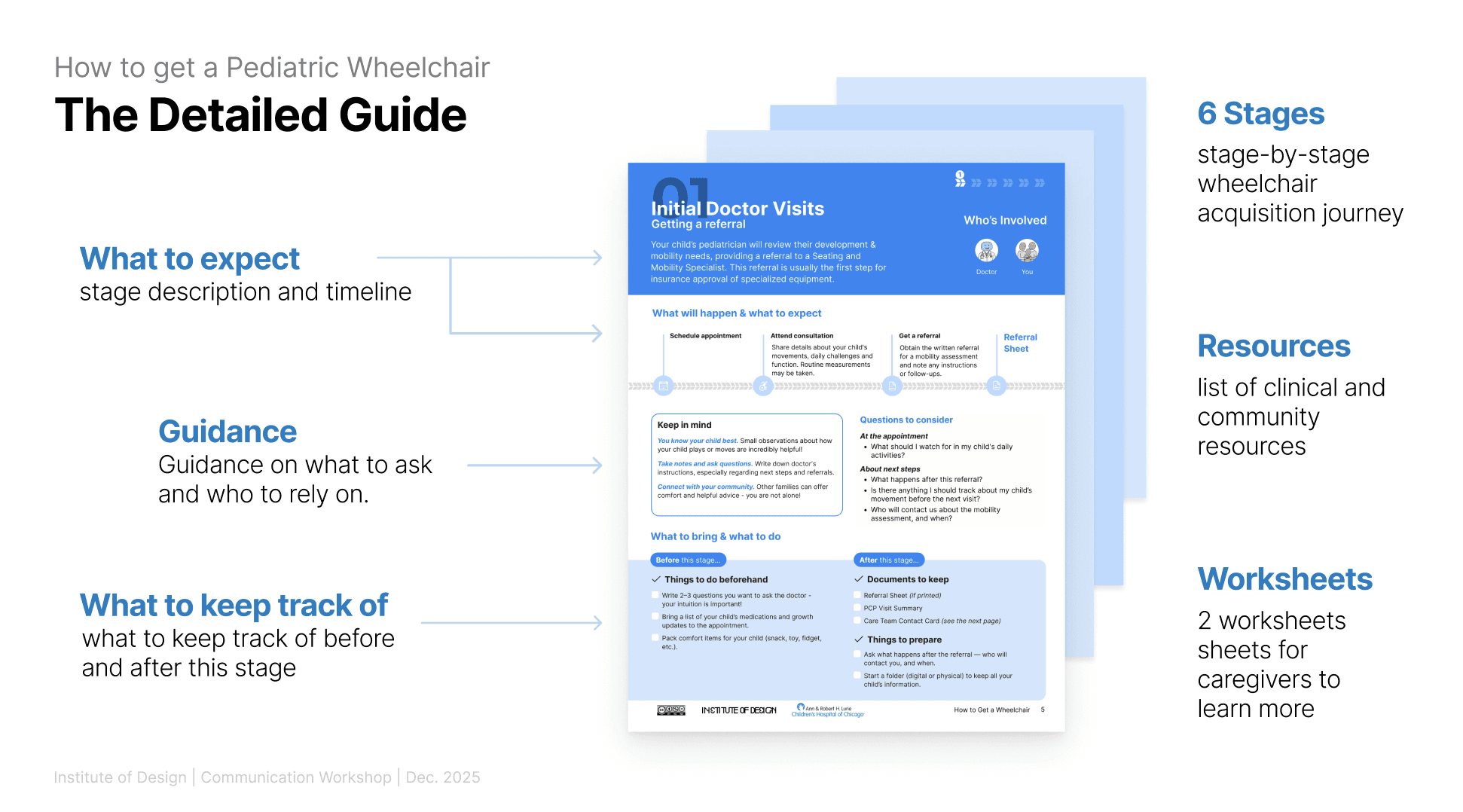
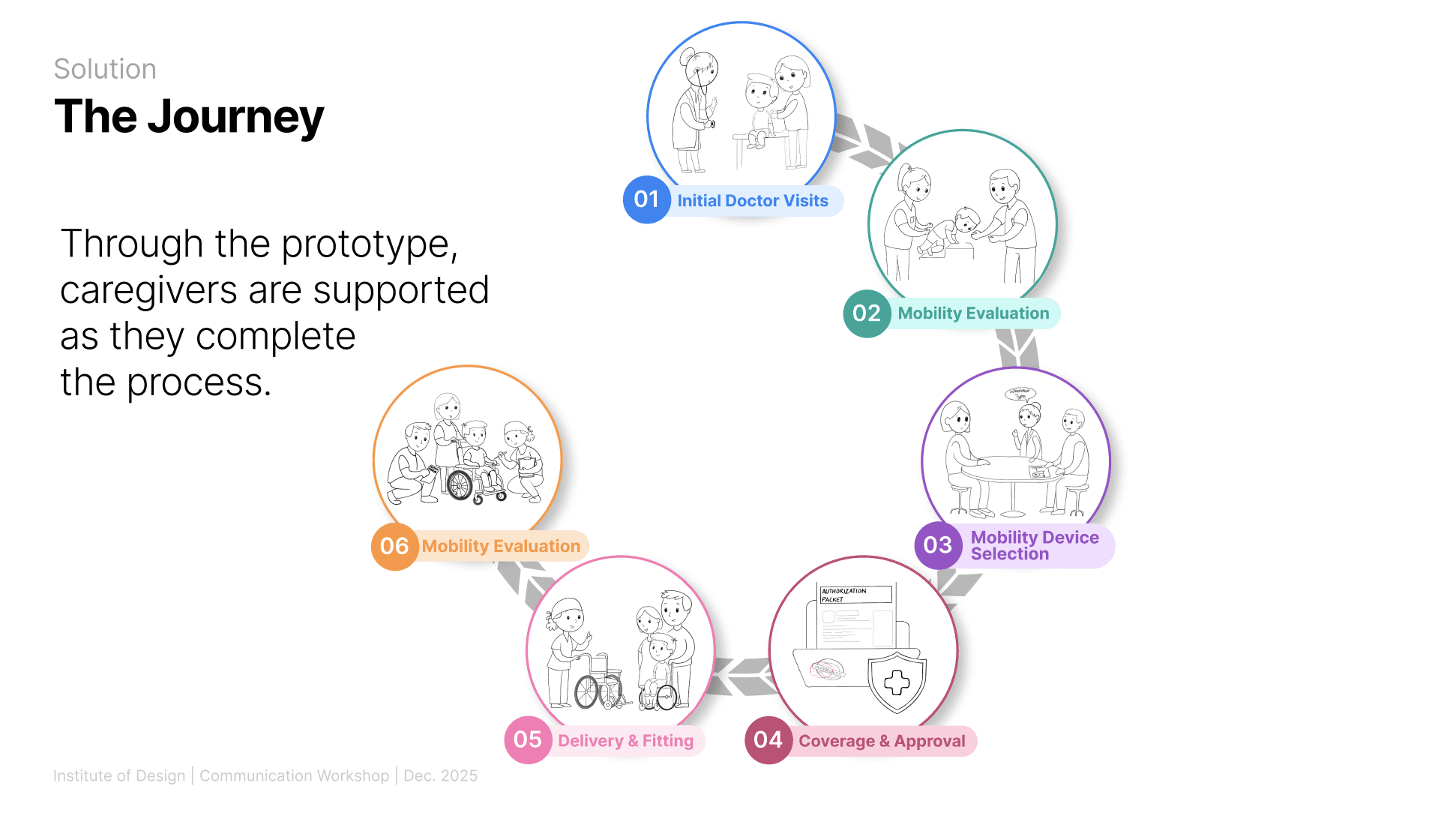
We designed a two-part navigation guide consisting of an overview handout and a detailed, stage-by-stage guide. Together, these tools support caregivers across the full wheelchair acquisition journey—from initial doctor visits to delivery and fitting.
How the Guide Works
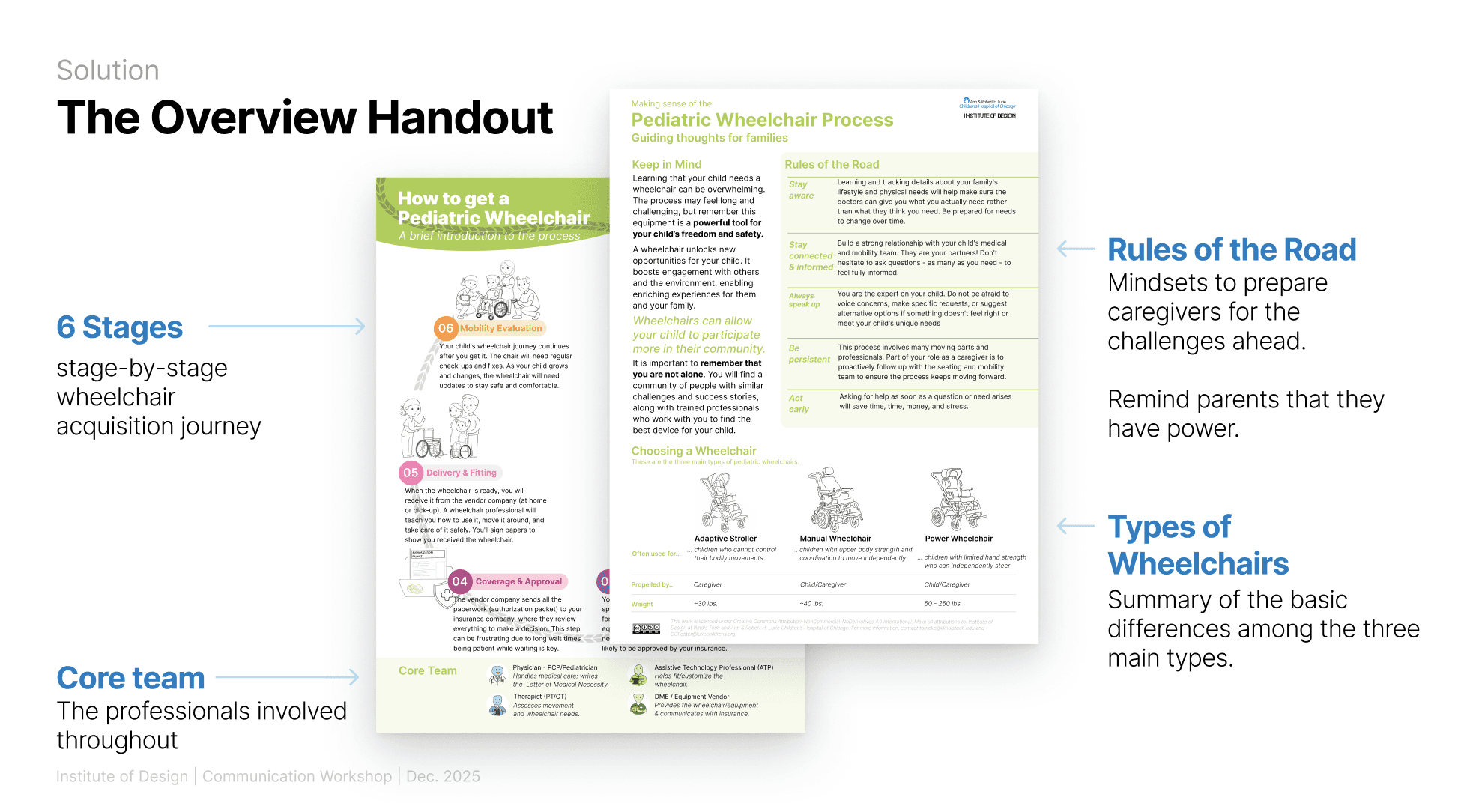
Overview Handout
Provides a high-level map of the journey, key mindsets to prepare caregivers, and an introduction to the professionals involved.
Detailed Guide
Offers in-depth guidance at each stage, including what to expect, what to track, questions to ask, and worksheets to support reflection and preparations.
Impact & Reflection
This project highlighted how design can function as quiet infrastructure—supporting people through complex systems without demanding attention or expertise.
Designing for caregivers required slowing down, reducing cognitive load, and making space for emotional realities that are often overlooked in clinical workflows.