AI-DRIVEN PRODUCT PROTOTYPING
TwoHomes
COMPANY
Chalet
Role
Product Designer · AI-Assisted Prototyper
EXPERTISE
AI-driven rapid prototyping · Product thinking · Design-to-build translation
YEAR
2025
Overview
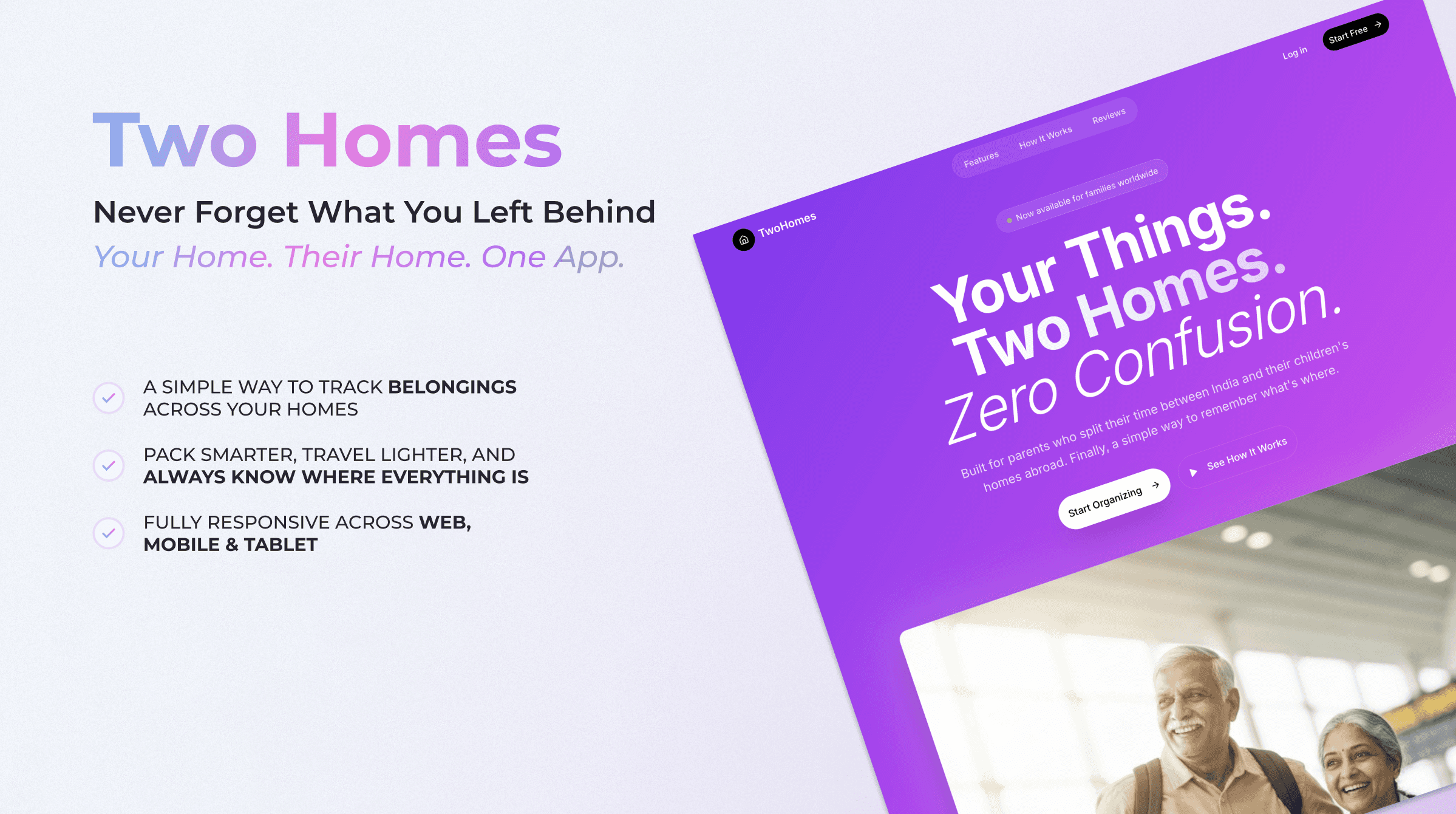
People moving between two homes—whether seasonal residences, family homes, or shared living situations—often lose track of what they’ve left behind. Without a reliable way to remember belongings, packing becomes stressful, repetitive, and uncertain.
TwoHomes was designed to remove this friction by giving people a calm, reliable way to track items across homes, pack with confidence, and travel lighter.
Key Capabilities
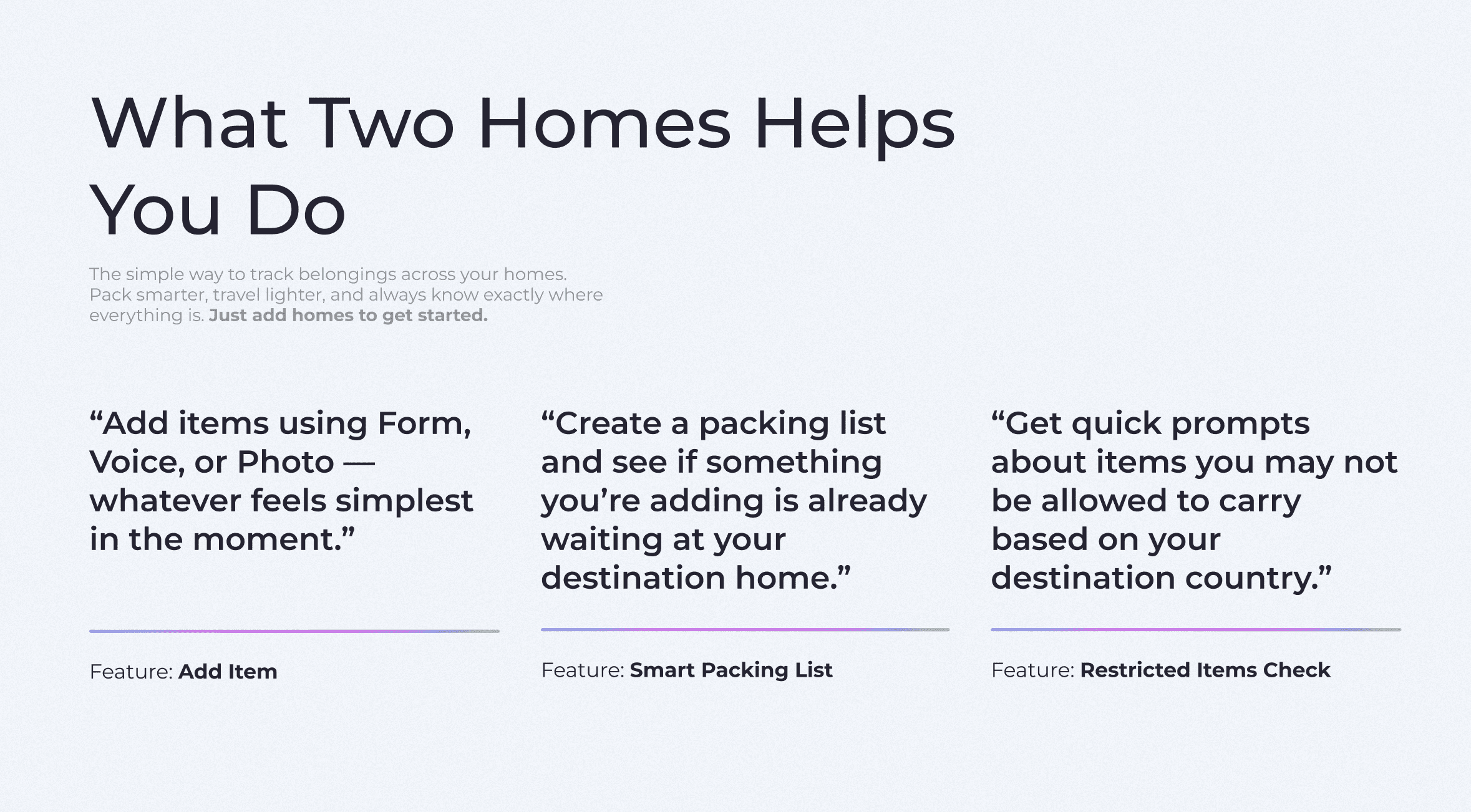
TwoHomes focuses on simple, flexible actions that fit into real travel and packing moments:
Add items using Form, Voice, or Photo, depending on what feels easiest
Create smart packing lists that show what already exists at the destination
Receive quick prompts about restricted items based on destination country
The goal is not exhaustive inventory management, but clarity—knowing what’s where, without mental overhead.
Build & Iteration Strategy
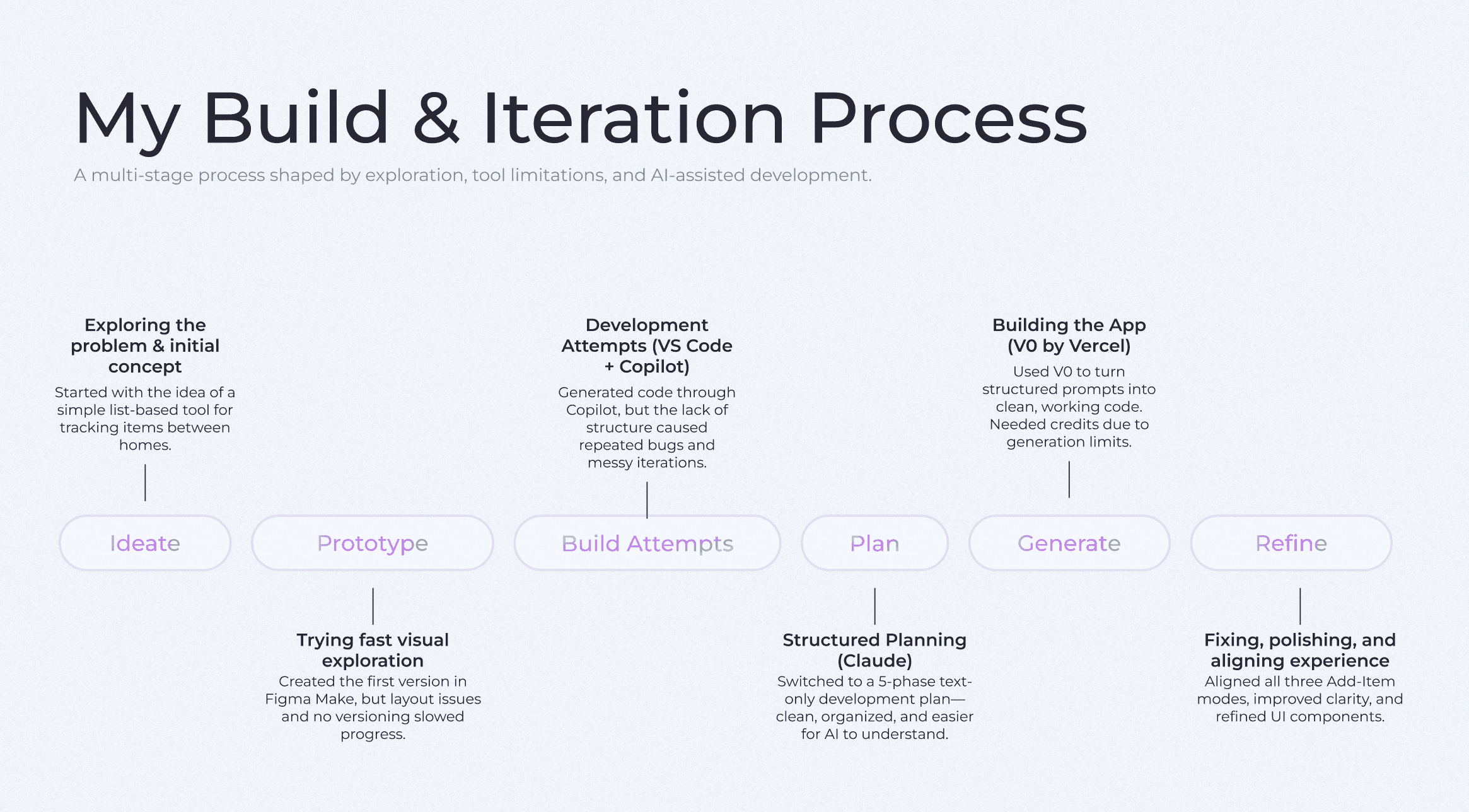
This project followed a non-linear, tool-driven build process, shaped by experimentation, failure, and iteration rather than a fixed design-to-dev pipeline.
I began with a simple list-based concept and explored multiple workflows before arriving at a stable, scalable approach.
Key phases included:
Early ideation and concept framing
Rapid prototyping and visual exploration
Multiple development attempts using different AI tools
A shift to structured, phased planning
Final AI-assisted generation and refinement
Each phase informed the next, allowing the product to evolve quickly while remaining grounded in real constraints.
Tool Orchestration
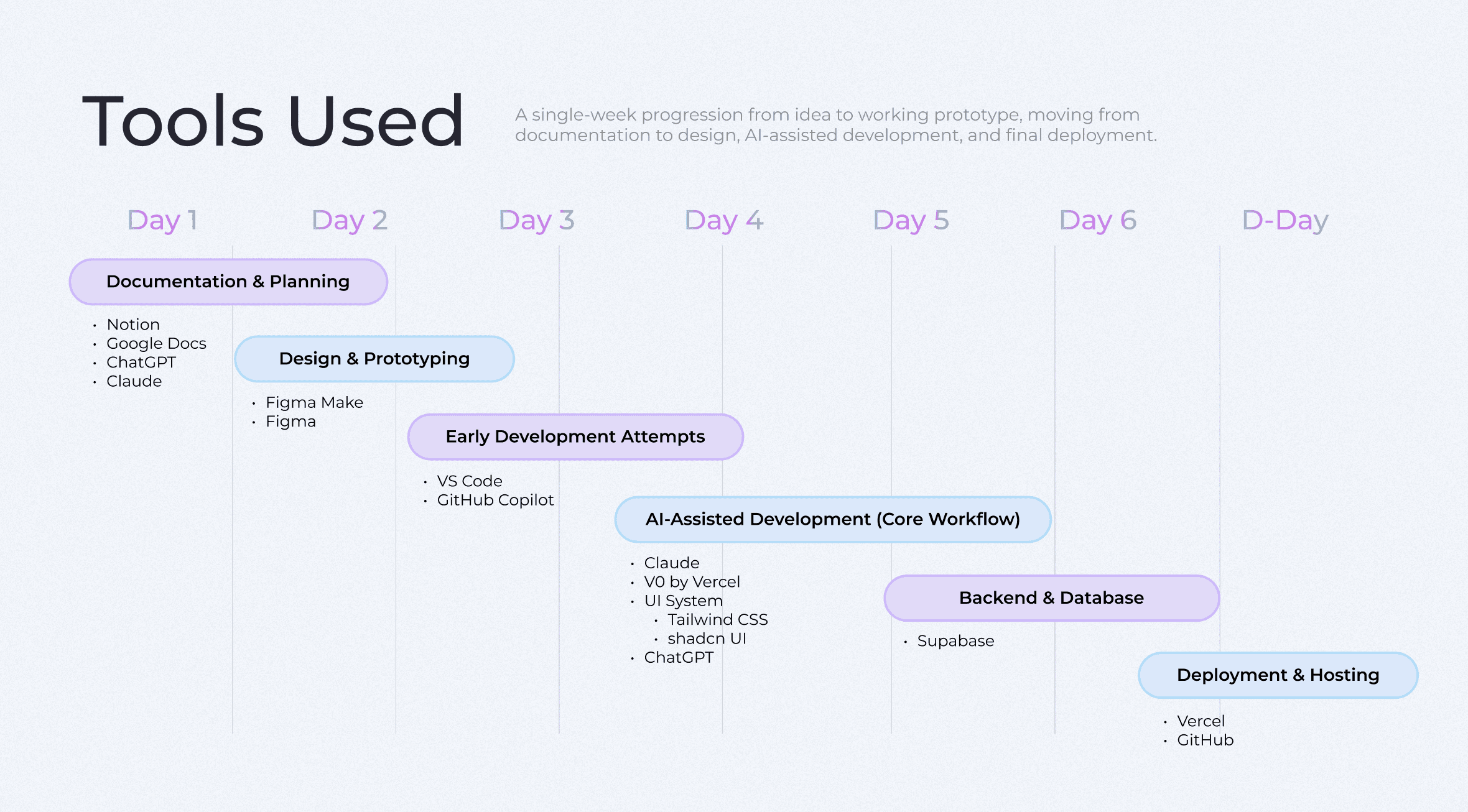
Rather than relying on a single AI tool, TwoHomes required orchestrating multiple tools—each chosen for a specific role in the workflow.
ChatGPT & Claude were used for structured planning, prompt refinement, and phased development logic
Figma & Figma Make supported early visual exploration and layout testing
VS Code + GitHub Copilot enabled early development attempts and exposed limitations of unstructured generation
V0 by Vercel became the core build engine, translating structured prompts into clean, working UI code
Supabase handled backend data and authentication
Vercel supported deployment and live testing
This orchestration allowed rapid movement from idea to working application within a single week.
Challenges
Using AI tools at speed surfaced real constraints that shaped the final workflow:
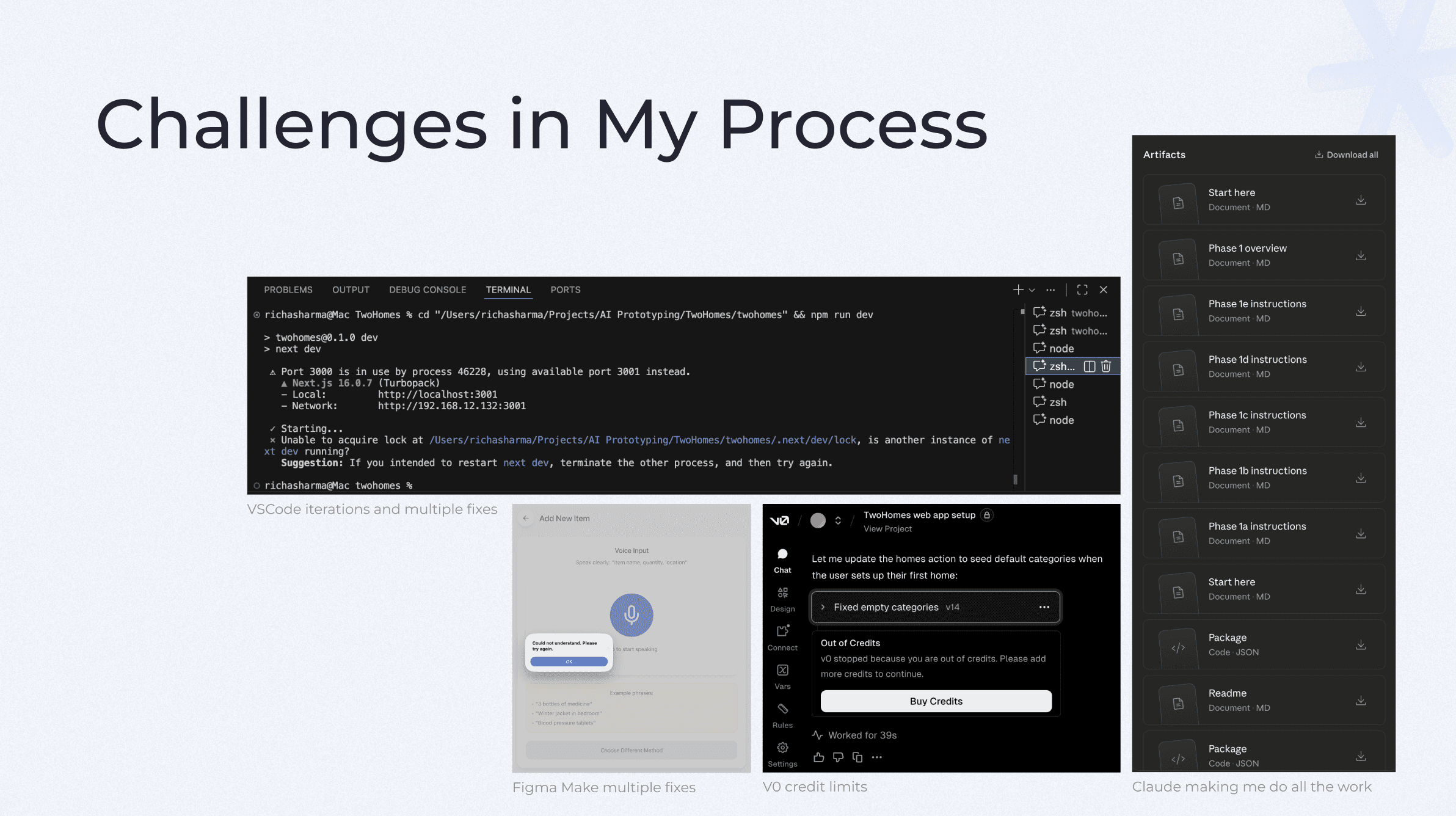
Figma Make introduced layout instability and lacked robust versioning, slowing iteration
VS Code + Copilot produced unstructured code, leading to compounding bugs across iterations
V0 enabled fast generation but imposed usage limits, requiring careful planning and prioritization
Claude required highly explicit prompting, often shifting cognitive load back to the designer
These challenges forced a transition from scattered experimentation to a phased, text-first development strategy that AI tools could reliably execute.
Results
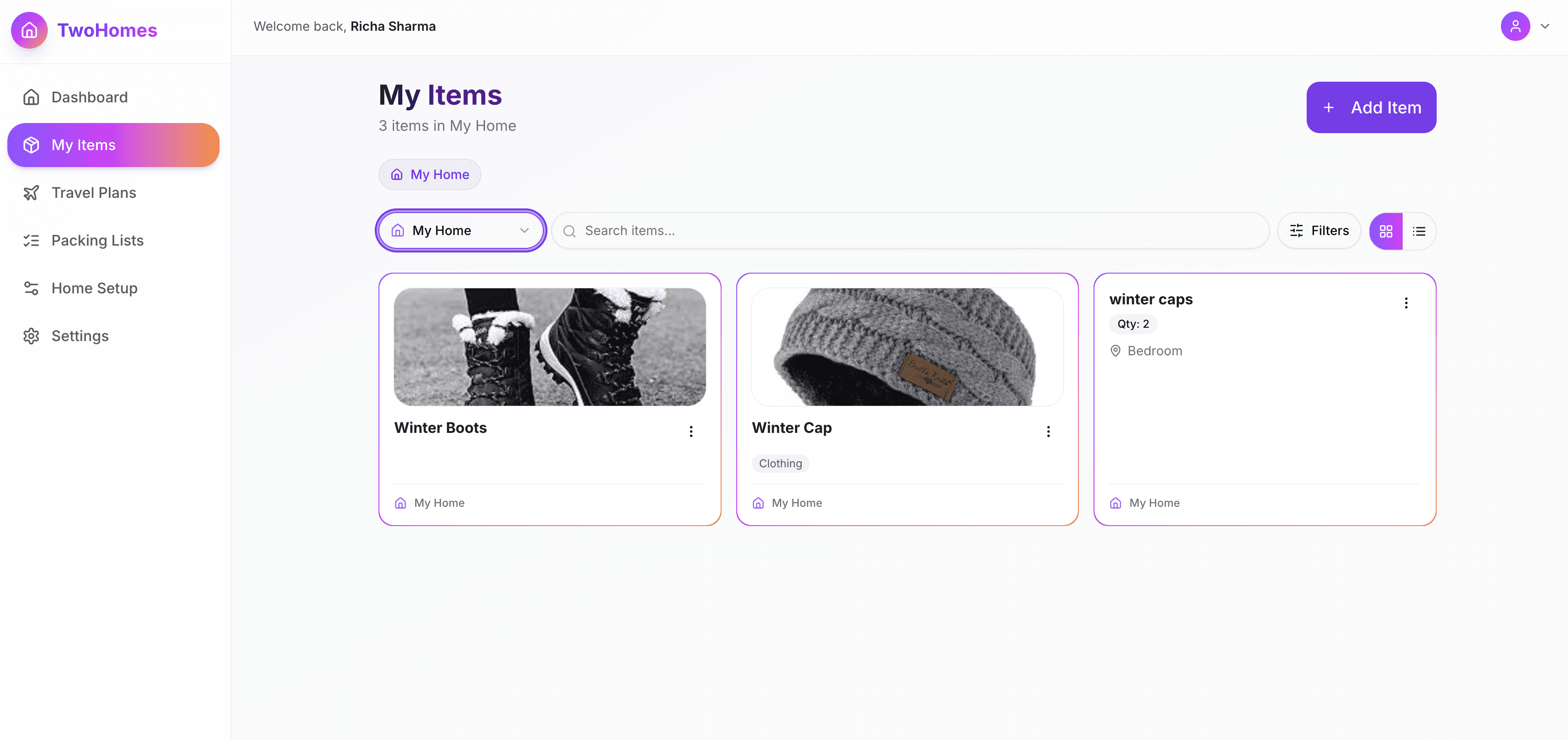
Once the workflow stabilized, structured prompts were used to generate consistent, production-ready UI components. The focus shifted from exploration to alignment—ensuring that all Add-Item modes shared the same fields and labels, refining interaction clarity across screens, and polishing components for consistency and responsiveness.
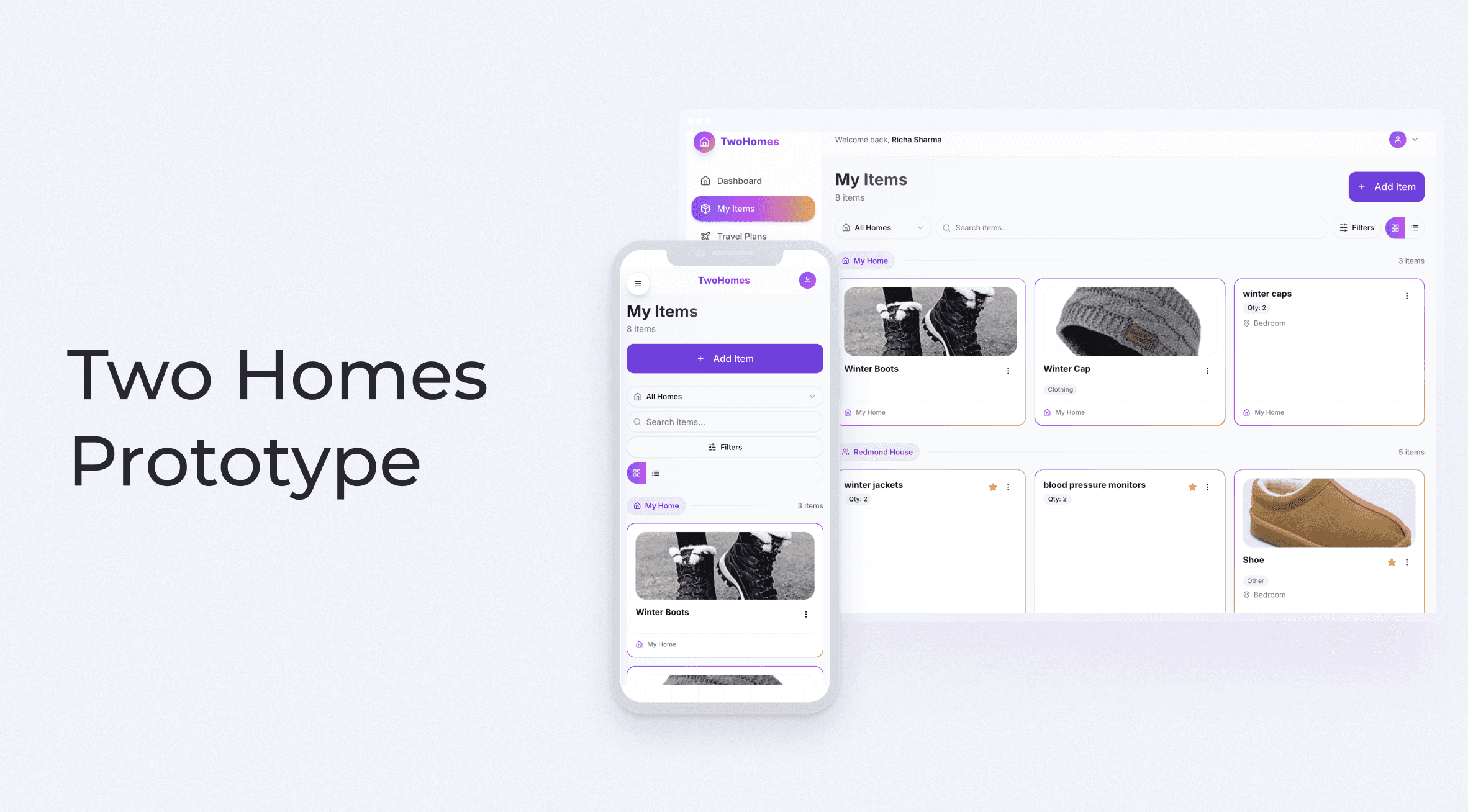
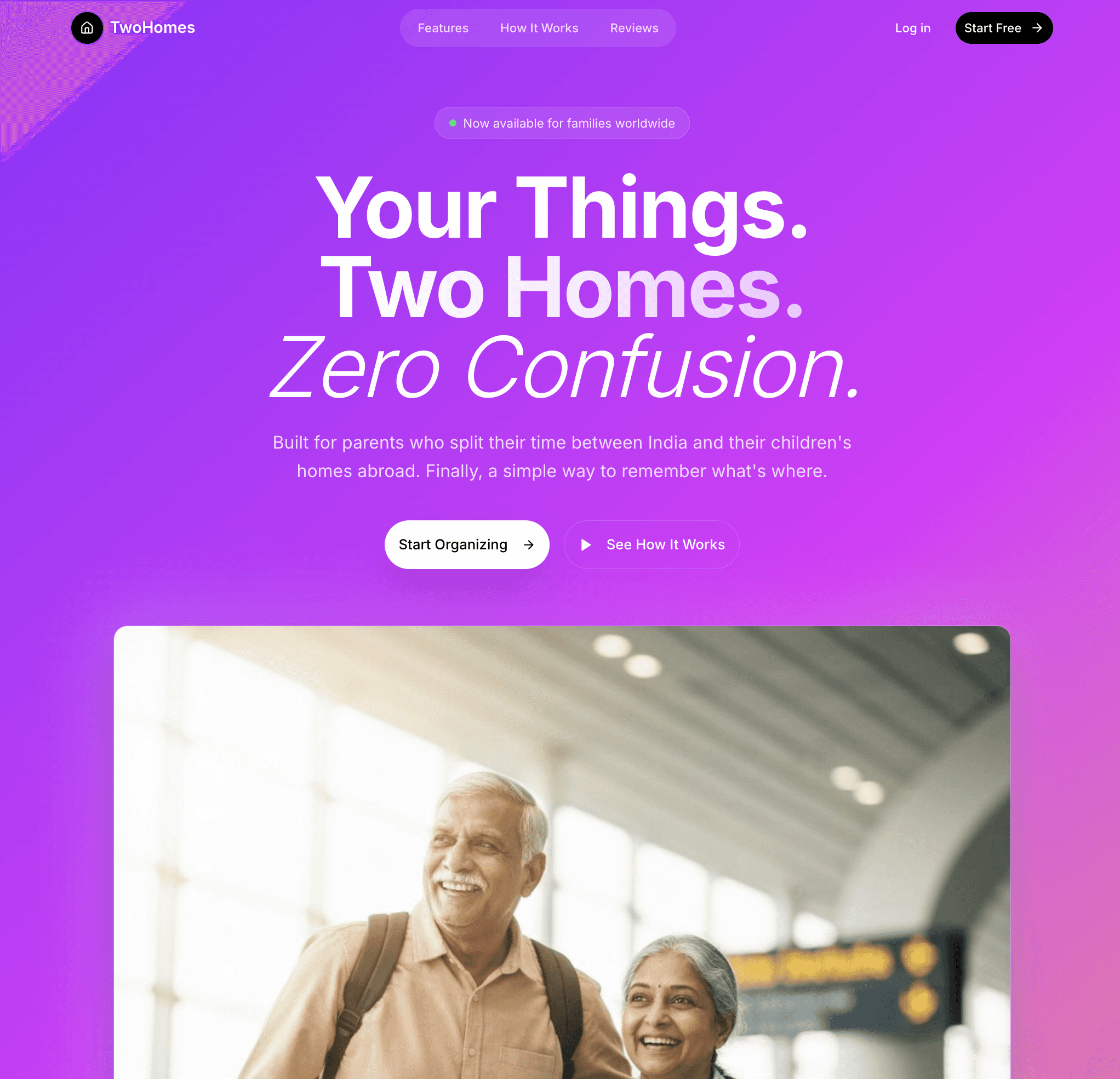
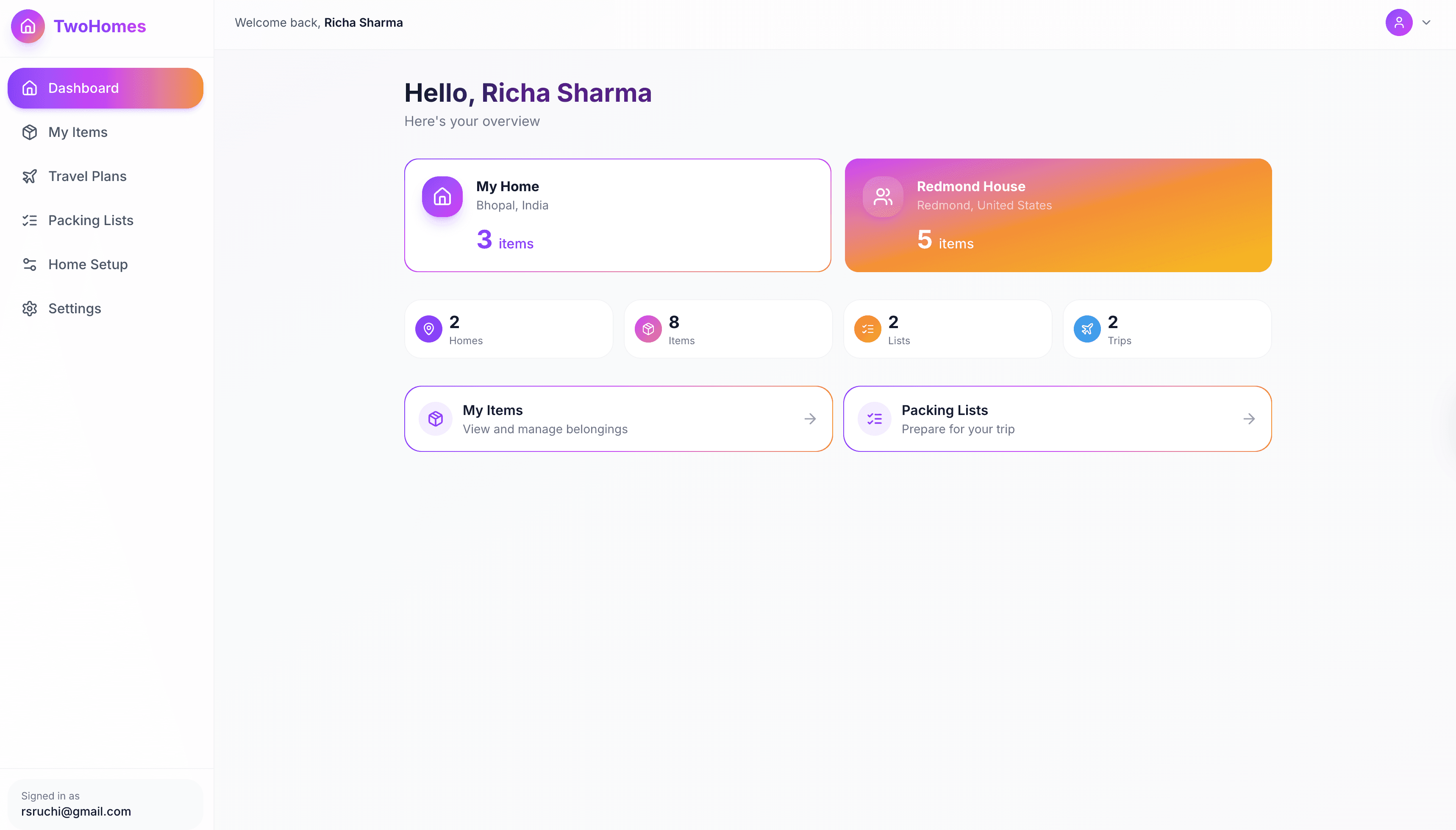
This approach resulted in a fully functional application that could be tested live, rather than a static or simulated prototype. TwoHomes shipped with multi-home item tracking, flexible input modes, clear and consistent UI patterns, and a scalable backend and deployment setup.
More importantly, the project demonstrated how AI-assisted workflows can meaningfully compress the design-to-build cycle—enabling a single designer to move from original problem discovery to deployment without sacrificing coherence, usability, or technical viability.
What’s Coming Next
Future iterations of TwoHomes could extend beyond the initial scope to include:
Shared family accounts for collaborative item management
AI-powered packing assistance and duplicate detection
Pre-travel checklists and reminders
Support for downsizers, retirees, students, and long-stay travelers
Global expansion with country-specific restrictions and guidance
Full inventory systems for storage units and seasonal belongings
These features were intentionally scoped out to prioritize a stable core experience.