RESEARCH & COGNITION
Learning Rhythms
COMPANY
Coursera × CLI
Role
Web Designer
EXPERTISE
Interaction Designer & Researcher
YEAR
2025
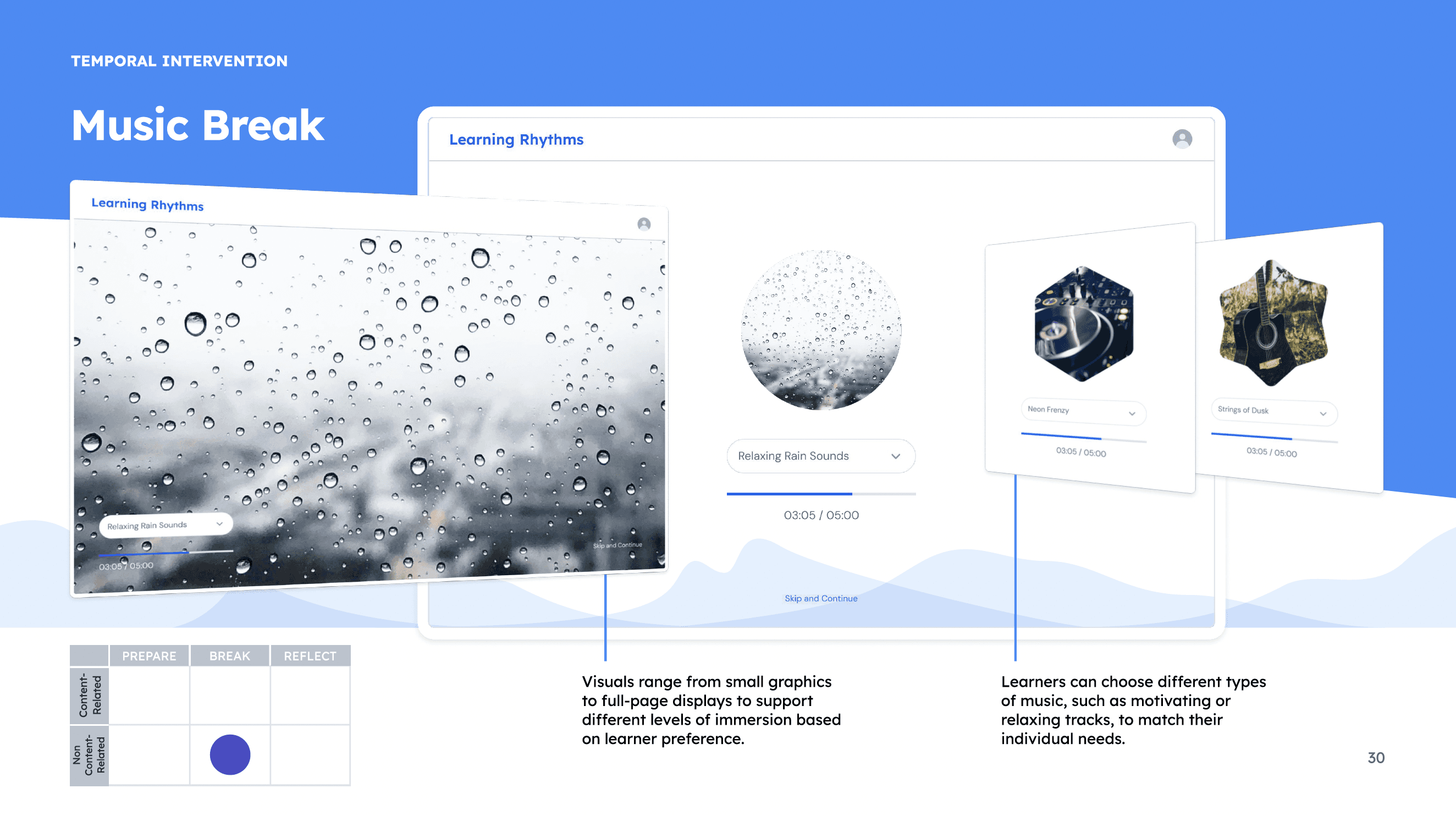
Project description
Learning Rhythms is a research-led exploration into why many online learning platforms fail to support sustained engagement—particularly for learners with diverse cognitive needs.
The project was developed during a summer internship in partnership with Coursera and the Illinois Institute of Technology’s Center for Learning Innovation, and involved end-to-end work spanning research, synthesis, conceptual modeling, and interface prototyping.
Problem Context
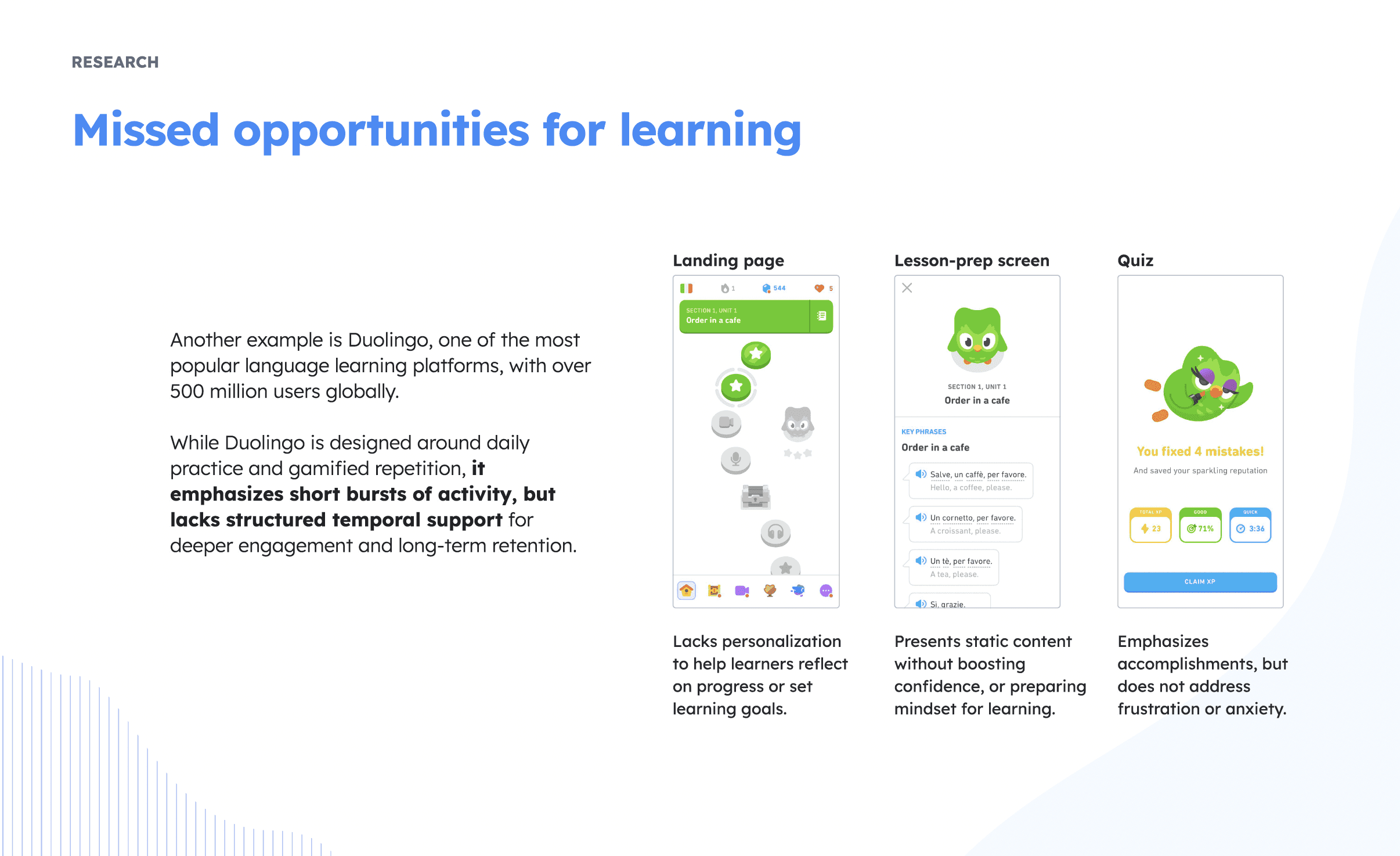
Since the pandemic, online learning platforms have scaled rapidly, offering flexibility and access to millions of learners. However, high drop-off rates, low completion, and persistent disengagement suggest that content quality alone does not lead to effective learning.
Our research indicated that most platforms are designed around an “average learner” assumption—prioritizing standardized content delivery while overlooking how learners manage time, transitions, attention, and emotional load outside a classroom setting.
Research Approach
Literature & Prior Research
We grounded the project in existing research on learning in virtual environments, cognitive load, memory retention, and engagement—building on experimental studies that examined how transitional experiences influence learning outcomes in VR and online contexts.
Platform Analysis
We analyzed over 20 online learning platforms to identify common patterns in pacing, feedback, and learner control. This revealed that transitional moments—such as preparing to start, pausing mid-lesson, or reflecting afterward—were largely treated as passive or empty states.
Learner Perspectives
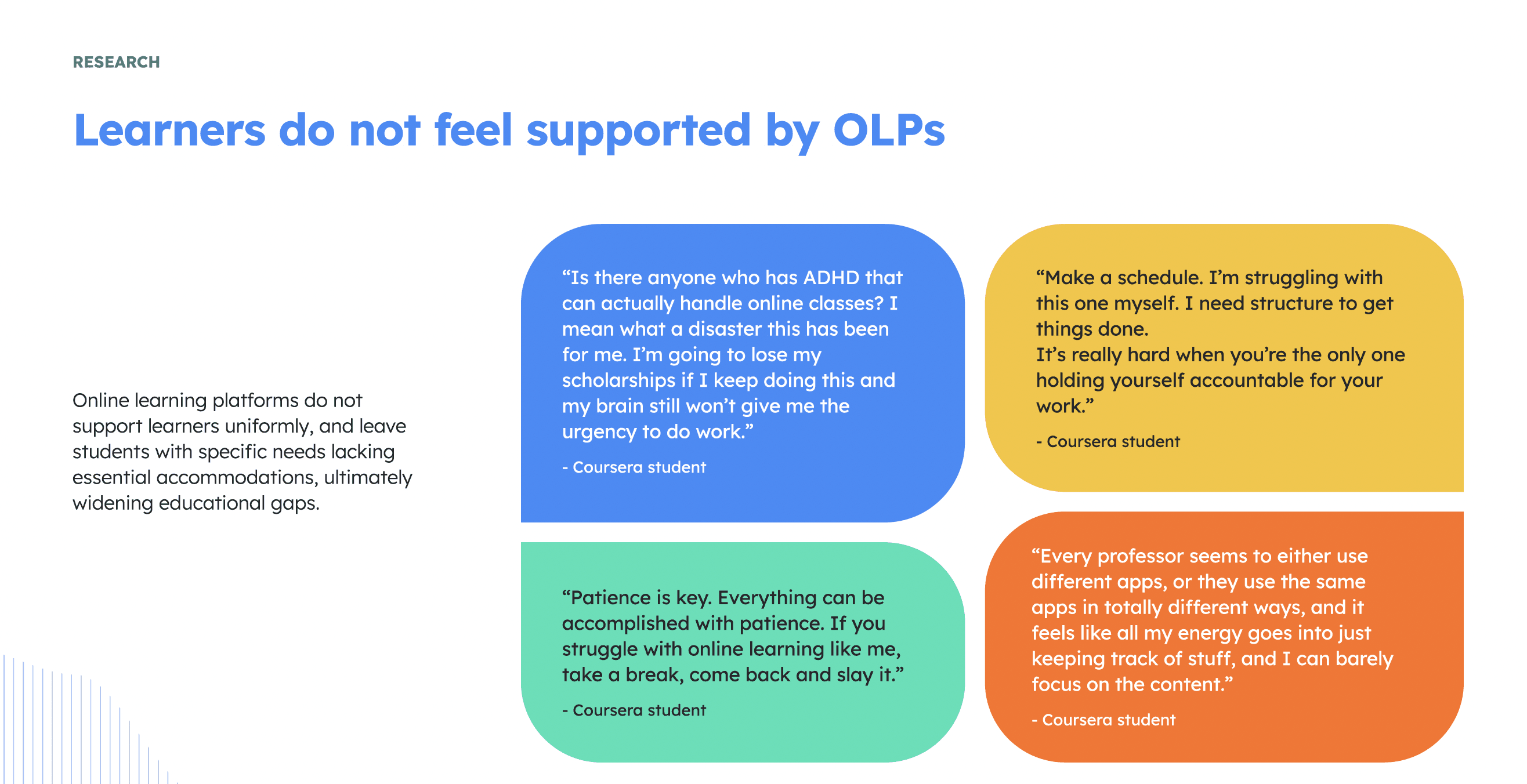
Qualitative insights from learner discussions and testimonials highlighted recurring challenges around self-regulation, time management, and anxiety—particularly among learners with ADHD and other neurodivergent profiles.
Key Insights & Reframing
A key insight from our research was that online learning platforms do not fail because learners lack motivation, but because they assume learners already possess strong self-regulation and metacognitive skills.
In the absence of classroom structure, time itself becomes a cognitive burden. Learners must decide when to start, how long to persist, when to pause, and how to recover from frustration—without meaningful support from the platform.
Concept: Learning Rhythms
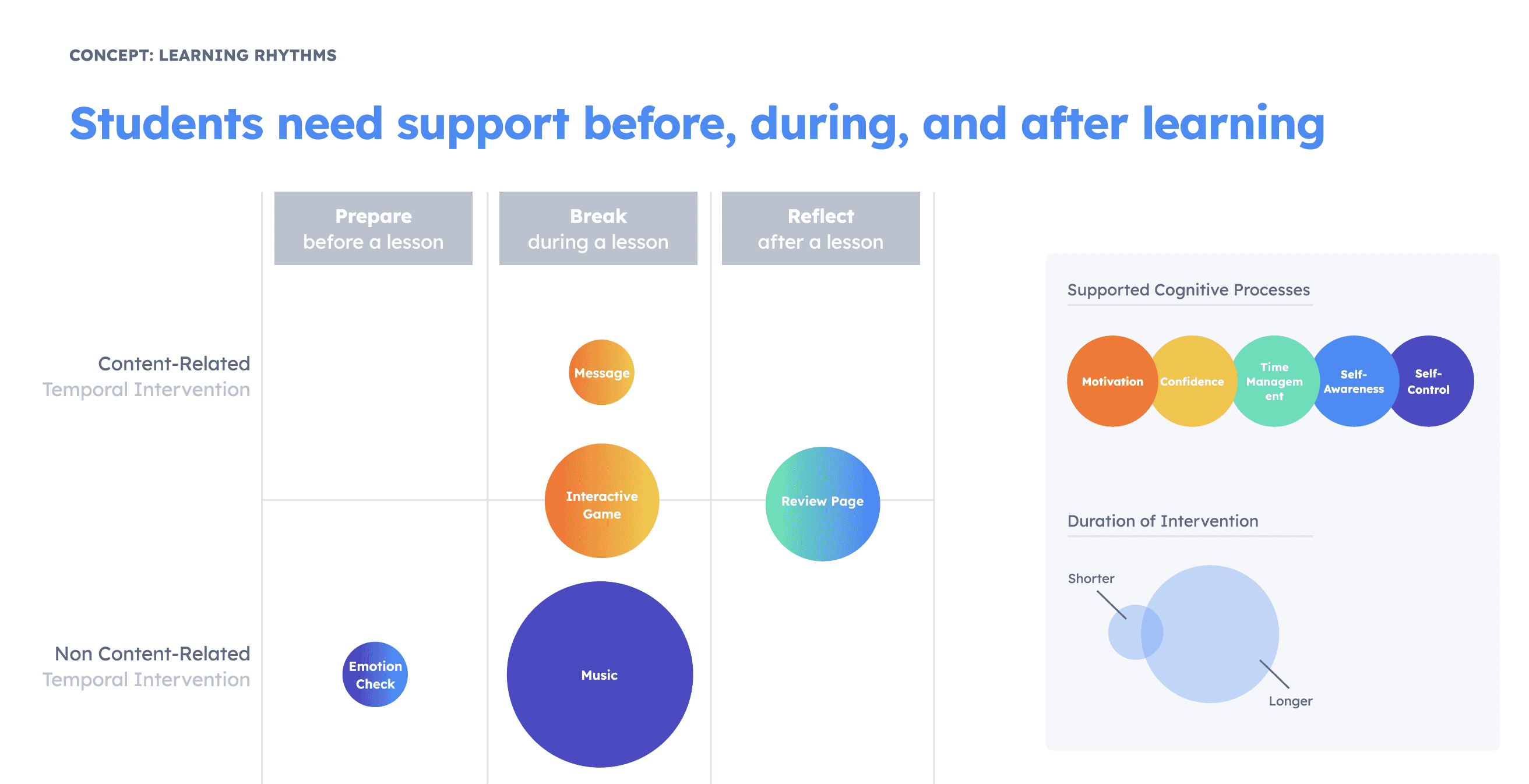
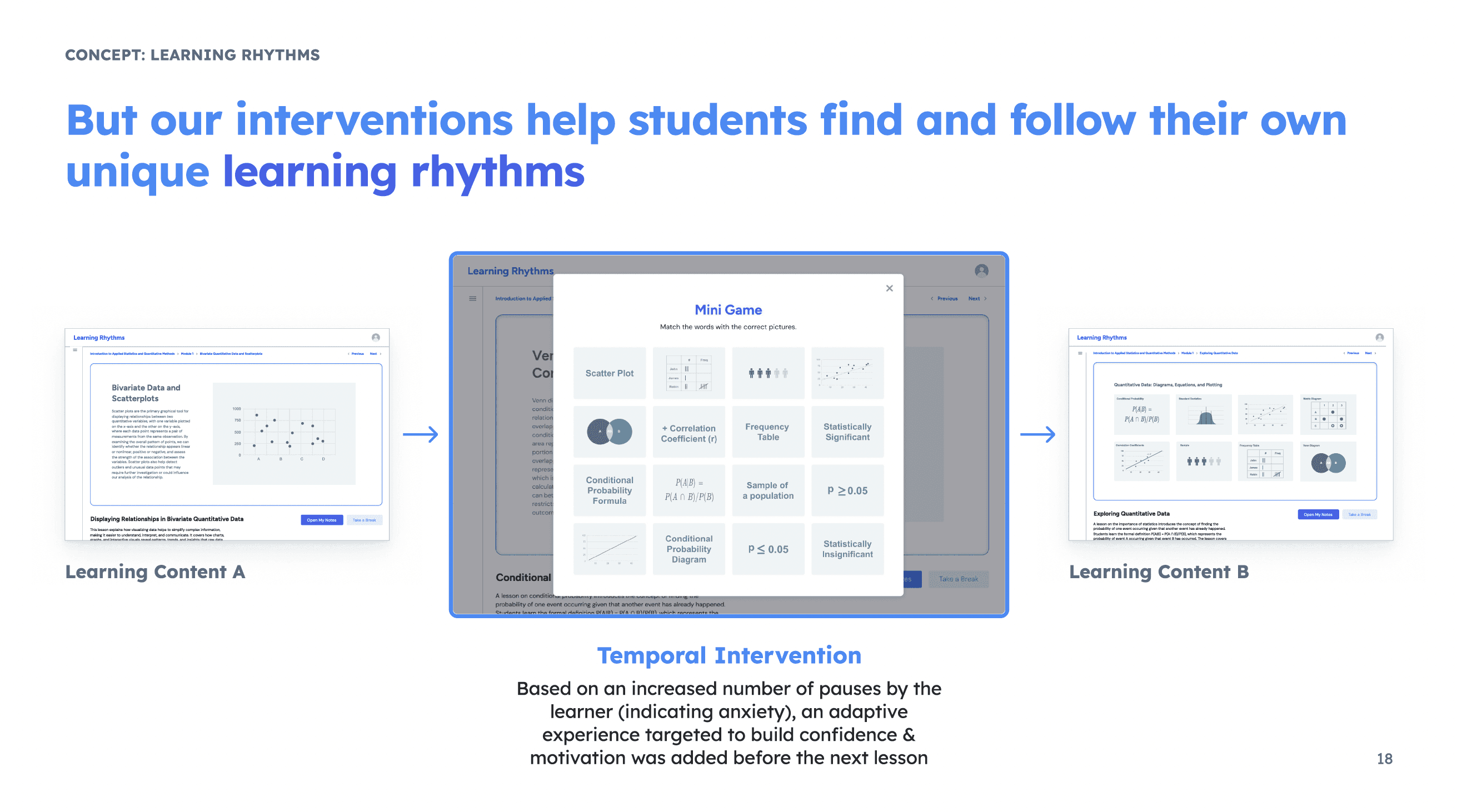
Learning Rhythms reframes online learning as a temporal experience rather than a linear sequence of modules. Instead of moving learners directly from one lesson to the next, the concept introduces adaptive temporal interventions that support preparation, pausing, and reflection based on a learner’s cognitive state.
From Insight to Interface
The interface designs were developed as a direct translation of research insights into actionable learning support. Rather than adding new content, the designs focus on inserting small, adaptive interventions at critical moments in the learning flow—before, during, and after lessons.
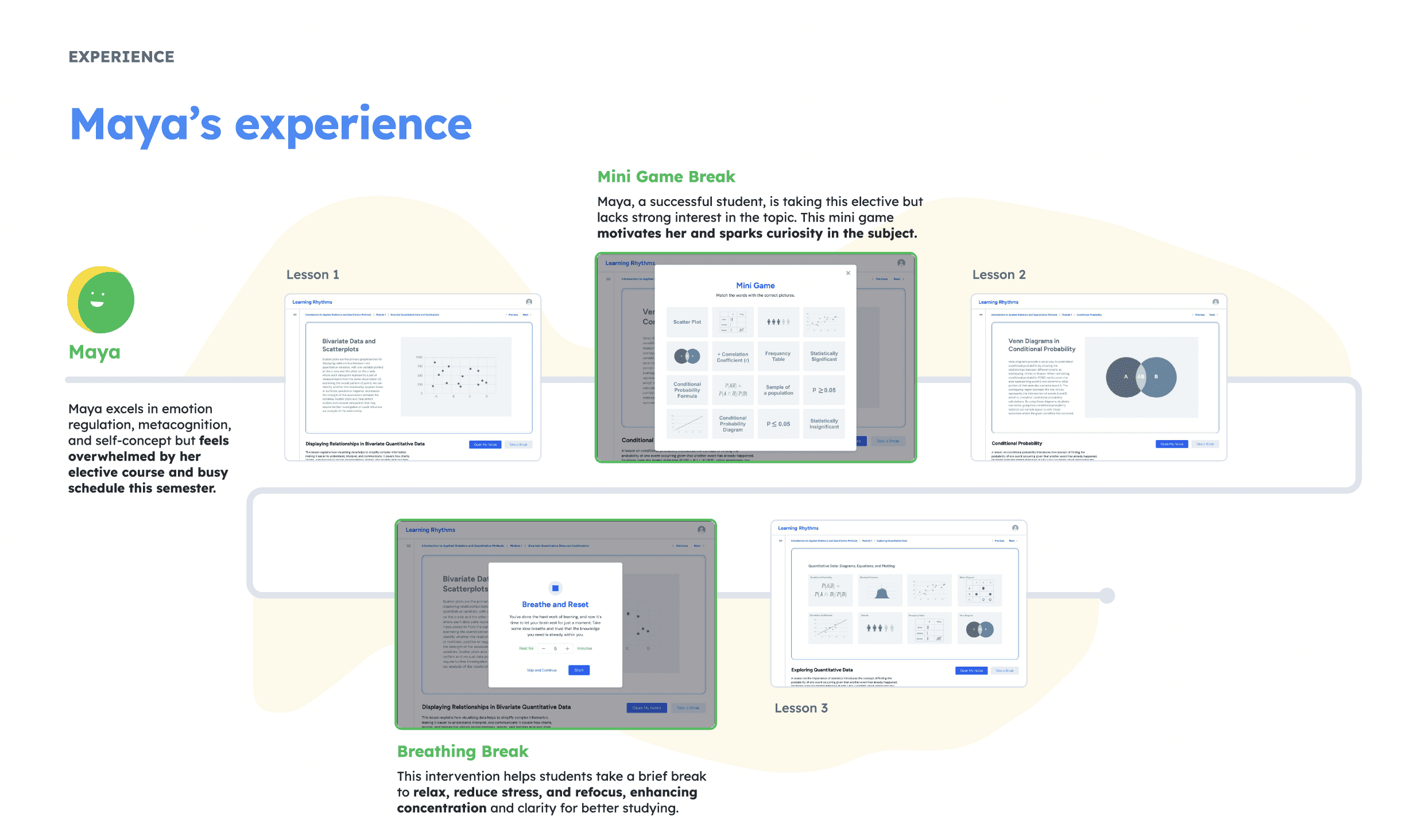
These interventions respond to indicators such as frequent pausing, time spent, or repeated errors, offering learners opportunities to reset, reflect, or build confidence before continuing.
Example Learner Experiences
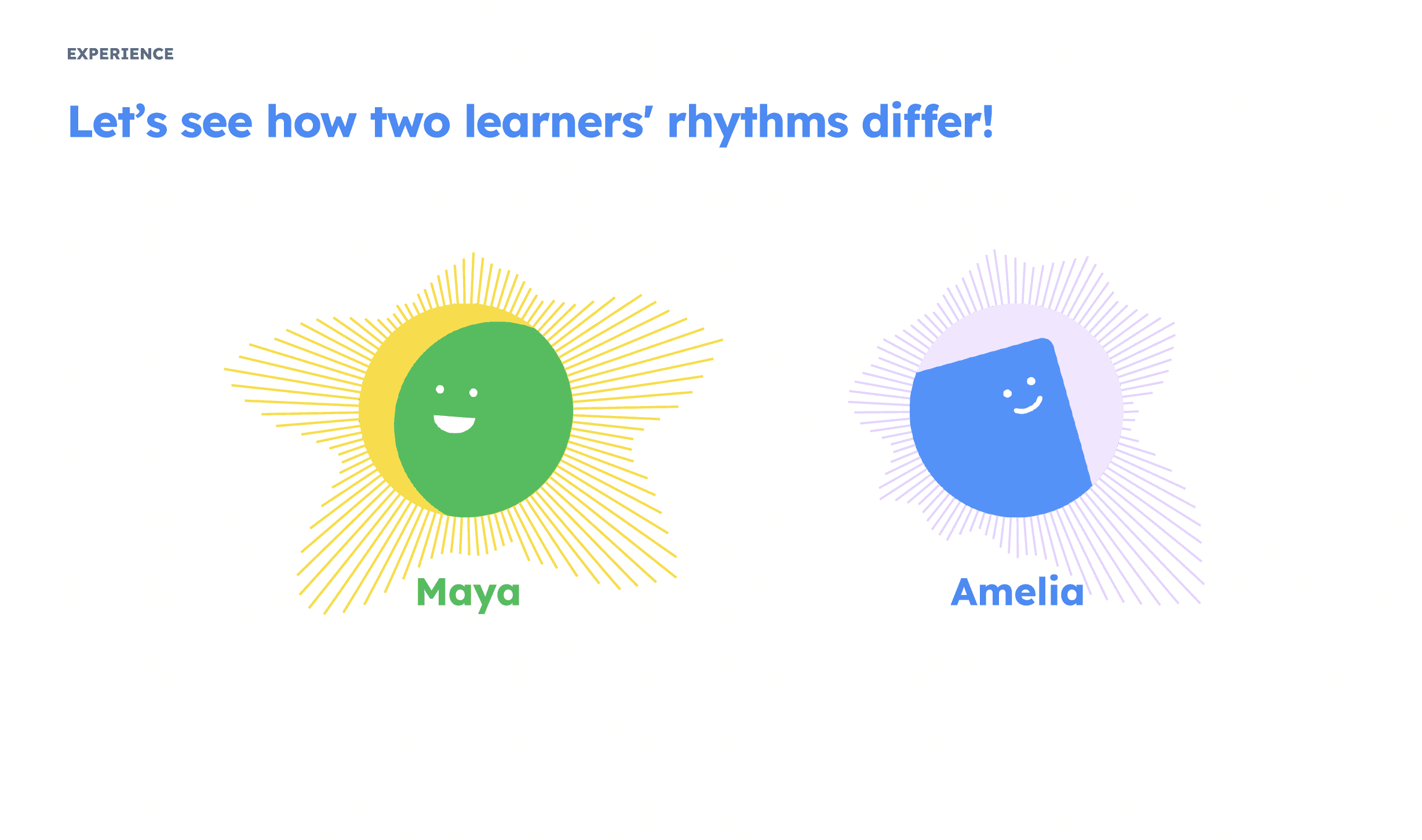
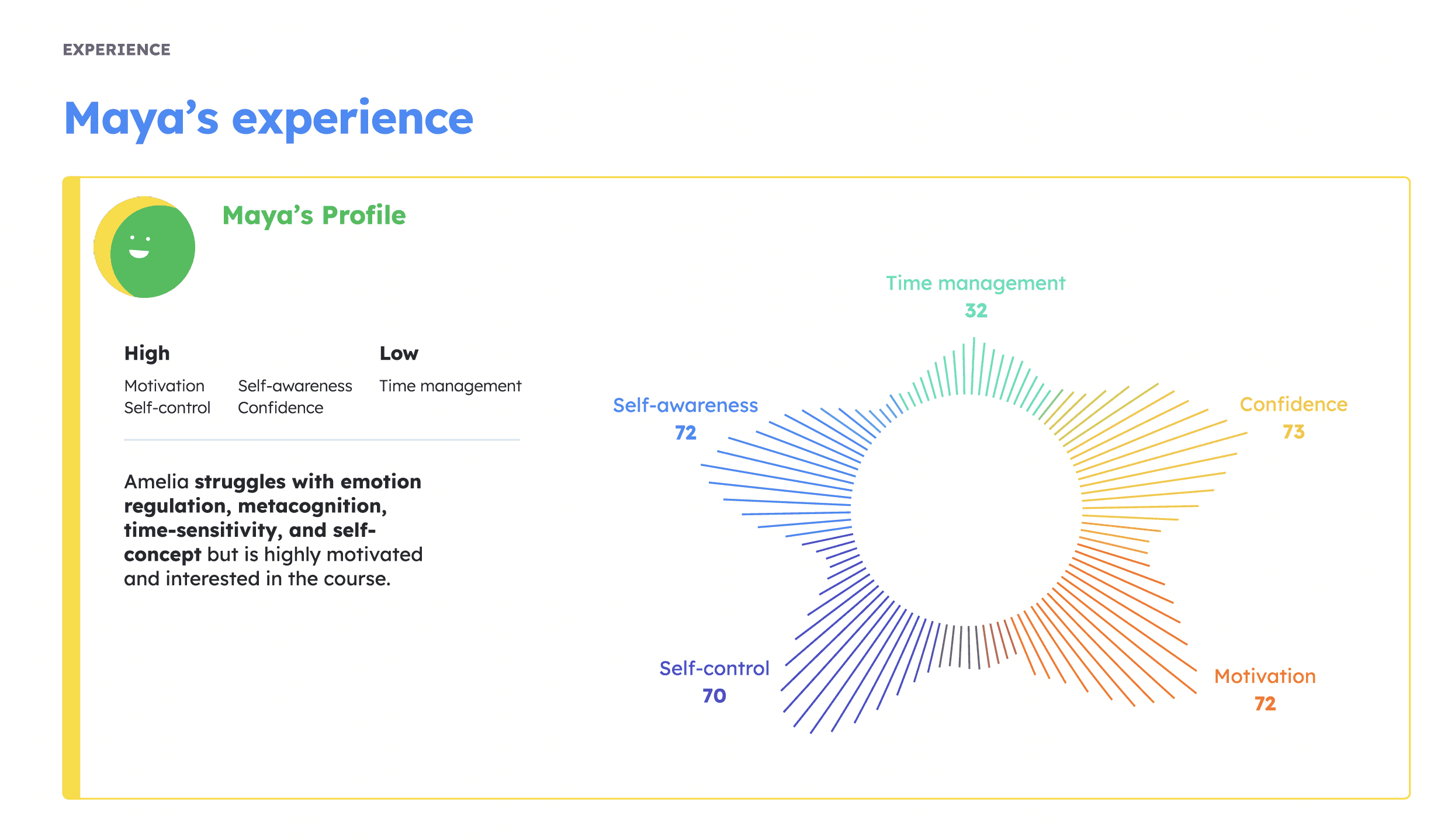
To explore how Learning Rhythms adapts to different needs, we mapped experiences for two learners with contrasting cognitive profiles. While both learners engage with the same course content, the timing, type, and frequency of interventions differ—supporting regulation without enforcing uniform behavior.